
Monday, November 10, 2008

Tuesday, September 02, 2008
guillame canet's TELL NO ONE (2006) & brad anderson's TRANSSIBERIAN (2008)
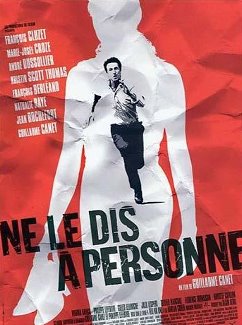 what is it about the French that they've managed to keep the spirit of Alfred Hitchcock alive as Hollywood's efforts at the suspense thriller have forked off into spectacle and twisty mediocrity? their fascination with him dates back to the dawn of his glory years, as the New Wavers worked to boost his critical standing and directors like Claude Chabrol and Henri-Georges Clouzot found themselves indebted to his genius as they thrived as his peers and rivals.
and it continues today, as currently evidenced by Guillaume Canet's sly, gripping Tell No One, produced in 2006 but only now seeing a US release. adapted from the novel by American mystery writer Harlan Coben, the story itself is a tip-off, and almost too self-consciously so: pediatrician Alexandre Beck (François Cluzet), still mourning his murdered wife after eight years, begins receiving mysterious emails on the anniversary of her death, just as a new development reopens the investigation and places him back under suspicion. the ensuing labyrinth of lies and secrets finds Beck chasing a love from beyond the grave (a la Vertigo) as he himself is pursued for a crime he did not commit (a la damn near half of the rest of Hitchcock's movies.)
Tell No One, however, is not merely imitation or even emulation; Canet (a heartthrob actor with only one previous feature under his belt) lays out his mystery with both focused aesthetic economy and a fierce desire to entertain, and it's the intersection of the two that really evoke the Master Of Suspense, from the interrupted quiet of the opening scenes to a heartstopping centerpiece across eight lanes of traffic.
there are elements here and there that break the spell: an ill-considered smattering of English pop music undermines Canet's good taste, and he puts his foot on the brakes a little too early, leaving the Big Reveal and its aftermath a bit flat. but it's said that the only way to write a mystery is to come up with the ending and write backwards, and Tell No One evidences a logical extension of that: though the final knot of formerly loose ends is as satisfying as it should be, the joy here is in the telling, which in its own novelistic way transcends Hitchcock's more arid orchestrations of suspense. what really distinguishes Tell No One from its Hollywood counterparts is that beneath the confident slickness is a dense thriller that takes itself, and the audience, seriously.
 it seems a little unfair, though, to pick on American suspense thrillers just as Brad Anderson's latest effort arrives in Knoxville as well, fundamentally different though it may be from Tell No One's literate riddling. (perhaps the film's complete reliance on European funding excuses it.) the cold, claustrophobic Transsiberian follows American couple Roy and Jessie (Woody Harrelson and Emily Mortimer) as they traverse by rail through the badlands of Russia on the way home from a Chinese mission trip, befriending another young couple and a Russian detective (Ben Kingsley) along the way.
no, the couple are not what they seem. and yes, the detective is one step ahead of everyone else. these are not Transsiberian's surprises. what is surprising is where the story goes with these worn elements, and how it gets there. (besides the train -- itself an old standby, especially if we're still talking about Hitchcock.) Anderson unfolds his story unhurriedly, and depends as much on the audience's expectations as the story itself to provide the unease. we gradually get to know Roy and Jessie, occasionally all the better through contradicted perceptions of them, and we attempt to divine the intentions of their traveling companions.
and then, finally, plans are disrupted, though the film continues its deceptively carefree pacing right up to the inevitable (yet thoroughly unexpected) eruption, after which Transsiberian fulfills its coy promises on substantially altered terms. there is deception and considerable suspense, all enhanced by the backdrop of a train barrelling across the tundra, its passengers cornered in the snow white vastness.
sadly, though, there is also final act that takes our upended expectations and squanders them on noisily strained credulity. the story's slow, careful acceleration demands an eventual release, but Anderson (excepting a spectacularly foiled trip to the dining car) provides it largely through shouting and gunplay, and in doing so steers the film straight back toward, if not directly into, the territories of a more mundane thriller. Transsiberian is a noteworthy effort from a director that continues to impress (The Machinist still haunts), but that makes it all the more disappointing when the train finally loses its steam.
(from the KNOXVILLE VOICE)
dean parisot's GALAXY QUEST (1999)
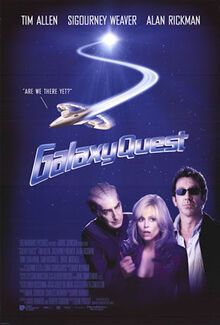 i've always heard reserved-but-still-unreasonably-complimentary things about Galaxy Quest, and understand them quite well after seeing the movie: here is a determinedly three-star flick that could not really be any better. (that last part is a little ambiguous, but i mean it in the nicest way possible.) the scenario is genuinely clever, if not altogether ambitious, and the no-name writers and director earn their pay alongside a cast that (particularly in the case of Enrico Colantoni, as the smiley, spastic leader of an alien race) obviously had a lot of fun. entertainment at it's most inconsequential is entertainment still.
woody allen's VICKY CRISTINA BARCELONA (2008)
 there's no disputing (even, sadly, among those little familiar with his actual work) that Woody Allen is an amorous sort of guy. throughout four prolific decades his work has focused largely on the interactions of the human heart, and sexuality has always been a part of that, from the ribaldry of his early comedies to the lustful indiscretions of his heavier dramas.
it's a little strange, then, that he would make thirty-eight feature films before getting around to Vicky Cristina Barcelona, the latest shaky step in his encouraging late-career course correction. the film, sunny and sensuous by design, follows its titular Americans (Rebecca Hall and Scarlett Johansson, respectively) on a Spanish holiday during which a Catalan painter (Javier Bardem) forces them to reevaluate their opposing views on love and romance, particularly when his tempestuous ex-wife (Penelope Cruz) returns to his home and his life.
these loaded ideas (Vicky's monogamous stability vs. Cristina's pursuit of passion) are obviously central to Allen's thought process, but for much of its running time the film glides lightly, if sometimes sloppily, along; whether it's the location, the themes, or both, Vicky Cristina Barcelona exists miles away from the grave melodramas and trifling laff-pits that have lately dominated his output. Spain and its environs (particularly Antoni Gaudi's stunning architecture) are done full justice, and the four leads bring a palpable chemistry to their increasingly delicate situation. (Bardem alone is a veritable swoon-factory, likely to seduce the tablecloth right off the table were two of the screen's great beauties not hanging around.)
but as odd as it may be to fault a 72-year-old man for not making a sexier movie, the shortage of genuine steam is the film's undoing. superficially it's all there, and there are sequences for which that's quite enough, but in the end the tone falls prey to the very dilemma being posesd thematically: love does not exist to be figured out, or overthought. (we know these are the themes because the talky proceedings, including an unwelcome, oddly clinical narration, conspicuously telegraph them throughout.) Vicky Christina Barcelona is a film about the heart and certain points south, so it's a shame Woody so rarely lets us out of his head.
(from the KNOXVILLE VOICE)

Monday, August 18, 2008


jacques tati's TRAFIC (1971)
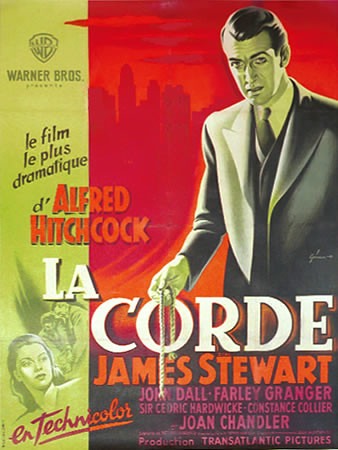
 French actor and filmmaker Jacques Tati only made a handful of films (most of them starring his bumbling, guileless alter ego Monsieur Hulot) but his inimitable blend of physical humor, quizzical social commentary and visual acuity was sufficiently brilliant to ensure that each remains in high regard despite its flaws. this pertains particularly to 1971's Trafic, the final and slightest of his Hulot quartet, but the film still handily impresses; the most plot-driven (insomuch as you can actually synopsize it) of Hulot's outings, Trafic finds him a car designer tasked with transporting his company's latest prototype to an Amsterdam car show. that Hulot is here enabling unbridled modernity is somewhat of a break for the character, but the attitude remains faithful: Hulot's position and task lay a foundation for Trafic's visual and thematic emphasis on the ubiquitousness of the automobile, which pays off repeatedly even if it doesn't leave as focused an impression as its predecessors. but the main attraction, as with all of Tati’s work, is the singular sort of cartoony comic ballet that overtakes every action and detail; as gifted as Tati is as a physical comedian, his real (and rare) contribution to comedy is his profound exploitation of the medium itself, twisted, bent, and made beautiful by the whims of one of film comedy’s genuine visionaries.
(from the KNOXVILLE VOICE)
alex proyas' DARK CITY: THE DIRECTOR'S CUT (1998)
 in the final couple of years of the twentieth century a heady sort of trend emerged in science fiction film; reacting largely to technology's progressing effect on the human experience, The Matrix and a handful of lesser tagalongs wrapped up notions of reality and experience in a bow of paranoiac sci-fi capering. the easy pinnacle of this mini-genre, though (now that we can all agree on The Matrix as little more than a rad tech demo) is the one that takes its cues from deep fantasy rather than virtual reality: Alex Proyas' 1998 stunner Dark City, which follows an apparently murderous amnesiac (Rufus Sewell) through the streets of its titular metropolis as he investigates his own emerging telekinetic powers as well as a race of pasty "Strangers" who may or may not be bending reality to their own sinister purposes.
silly as its synopsis may sound, Dark City's gorgeous, austere blend of fantastical sci-fi and film noir has gained an enthusiastic following since its initial box office sputter (Roger Ebert champions the film as 1998's single best), and the newly prepared Director's Cut should only improve its standing. most of the changes are minor, even unnoticeable, but it's the big one that makes the difference: gone is the theatrical release's studio-mandated opening narration and montage, which together gave away egregious chunks of information about the nature of the Strangers.
the result is a much more suitably mysterious film, as these antagonists and their visually wondrous methods are afforded the introductions and impact they deserve, reinforcing Proyas' strong vision for what the disc's special features reveal to be a film of great personal importance to him. it's generally true that the "alternate cut" has lately become as much a way to move DVDs as a deference to the filmmaker, but fans of the film (and even moreso those seeing it for the first time) will be glad to know that this one moves an already underrated film squarely into the upper reaches of the sci-fi canon.
(from the KNOXVILLE VOICE)


christopher nolan's THE DARK KNIGHT (2008)
 more than enough has been said about The Dark Knight's across-the-board successes and more specifically Heath Ledger's game-changing performance, but what stood out to me just as much (especially on a second viewing) is how genuinely accomplished the Nolan/Nolan/Goyer script is, and i hope they're not hidden in Ledger's shadow come awards season. costumes aside, The Dark Knight is as much a crime novel as a summer blockbuster, and walks a fine line between density and accessibility; what's more, though, the script is completely saturated with its challenging themes, and for every moment where it spreads its complex good vs evil, order vs chaos ideas on a little thick there are three or four where they've been woven almost imperceptibly into the narrative. my immediate reaction to The Dark Knight was that "the Godfather II of comic book films" is a pretty fair comparison, and the more i think on it the fairer it gets. i'm reaching back to write this all the way from September (a busy late summer put me a bit behind) but this is still the best "movie" AND the best film i've seen in 2008.

Thursday, July 10, 2008

Subscribe to:
Posts (Atom)

 Posts
Posts


