Tuesday, June 26, 2007

alfonso cuaron's PRISONER OF AZKABAN (2004) & mike newell's GOBLET OF FIRE (2005)

watching it again, it's easy to identify Prisoner Of Azkaban as the best of Harry Potter's screen outings, and it's as much to Cuaron's credit as anyone else's. his Hogwarts (as opposed to Chris Columbus' kiddified tone-down) is better suited to the mysteries and dark times that befall it, and that's symptomatic of the rest of the movie's strengths over the two that came before; Cuaron's realist flourishes give the story a grim grounding it will need as the films progress, and Steve Kloves' smart, subtle changes (vs simple excision) liberate the story from its source material where his other scripts couldn't. once again, the supporting cast is terrific, from Gary Oldman to pinch-hitting Dumbledore Michael Gambon, who brings the character a wry vitality. pity, of course, that pacing problems are built into the time-bending final act, but the film has nothing if not grace to spare.

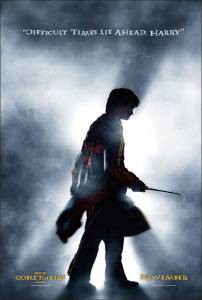
Newell's Goblet Of Fire, on the other hand, is cursed with Kloves' most leaden adaption - understandable considering the book's length and narrative breadth, but regrettable nonetheless. Goblet hits the notes it needs to for the most part, and the dragon chase is as brilliant as any sequence in the series, but it also makes a few poor decisions where the mystery is concerned, and cuts corners in the larger narrative with surprising recklessness. hopefully Order Of The Phoenix will fare better, and plug some of Goblet's leaks.

Saturday, June 23, 2007

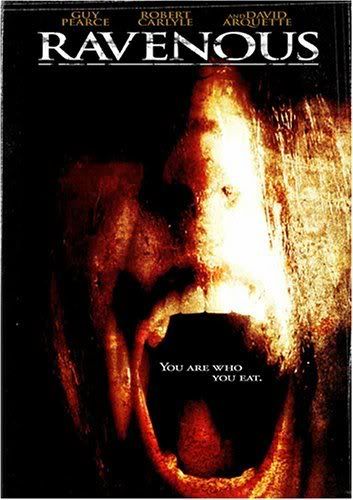
antonia bird's RAVENOUS (1999)

1999 saw the release of a nearly unprecedented batch of offbeat film classics, and among them Ravenous is surely the most underrated, and the only one i return to with any regularity. the cast, scenario, script, tone, look, and score (oh god, the score) are all pitch-perfect and utterly unique. a fun, flawless film that gets better every time i see it.

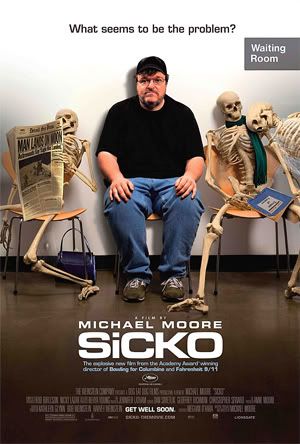
michael moore's SICKO (2007)

we'll start this where we need to: you already know what you think about Michael Moore. as Fahrenheit 9/11 and its accompanying controversy threatened to wholly commandeer the summer of 2004, it was hard not to take a stance on the portly provocateur, and thanks to his role as F9/11's cheeky protagonist/narrator, even discussion of the film itself eventually veered away from the culture of fear to a cult of personality figureheaded by a smiling, angsty film essayist in a dirty baseball cap. as with most consuming zeitgeists, retrospect reveals a truth somewhere in between the cries of "liar" and "saint"; the film was surely galvanizing and well-meant, but Moore's stagnant ironies and aw-shucks intellectual dishonesty make it hard to return to, as do painful memories of John Kerry's careful squandering of the resulting righteous indignance.

forget all that, though. with Sicko, his fifth nonfiction feature, Michael Moore has found a subject in full harmony with his self-image as a shit-stirring über-populist, approaching our desperately misshapen, ethically bankrupt health care system from an angle that eschews Right or Left, addressing us simply and directly as humans, and, what's more, Americans. where much of his recent work has favored a tone of glib anger, he here tempers his comedy with a quiet, moral sadness, and the result is by no small measure his most restrained, focused and affecting work to date, utterly engaging and enraging from its first frames.

the film opens (after a gem of a Dubya soundbyte) with a short collection of horror stories of the uninsured, including a man who was forced to choose which of two severed fingertips to reattach following an accident. (he opted for the cheaper of the two, paying $12,000 for a restored ring finger.) but this, as Moore soon informs us, is not a film about the uninsured – it's a film about the hundreds of millions of Americans who do have health insurance…and the surprising thinness of the line between the two.

indeed, the first act of Sicko dedicates itself to a devastating exposé of the insurance industry's cackling disdain for its preyed-upon policyholders, and Moore wisely focuses on the individual, from the "insured" (farce has rarely been so ruthlessly poignant as when Moore unshakily announces one woman's fate) to those who operate within the system, including a claims executive doing right by her conscience in front of a Congressional panel. naturally, though, the pols are in on the fix, as illustrated in a sequence detailing the bedroom antics of the medical industry and our legislative branch. (Moore, by the way, should go ahead and consider himself stricken from Hillary's Christmas card list.) this extended lament culminates in a succinct, razor-sharp montage deconstructing the insidious medical-industrial complex and its seemingly irrevocable role in American society, a sequence among Moore's very best work.

but what hope, then, do we have? most of the remainder of Sicko's running time finds Moore and his crew looking to our Western peers for answers. or, rather, one answer: forays to Canada, Britain, and France reveal socialized infrastructures in which all citizens are provided free medical care as a matter of course. such ideas are, of course, subject to scorn and ridicule in the United States, but as Moore affably badgers his way through emergency rooms and chemist's shoppes with wide-eyed incredulity, every bemused foreign smile suggests our own system as a sad, sick joke. no matter your familiarity with socialized medicine abroad, these trips hold some funny and thought-provoking moments, but the thrust of the sequence is consistent, and adamant: even our most staunchly capitalistic brothers and sisters around the world see universal healthcare as a clear moral and ethical imperative. even Moore's journey to Cuba with medically disenfranchised 9/11 workers depicts an obviously healthy government-run healthcare system, including a pharmacy where a cancer survivor is able to purchase her medicine for literally 1/2400th the price she pays in the United States.

this is strong stuff, but in the wrong hands (say, Moore's circa 2003) it might be just another entry in the string of activist nonfiction films for which Bowling For Columbine opened the floodgates – either narratively inert, fatally smug, or both. luckily, the determined humanism of this labor of love seems to have softened the Michael Moore we know and love to hate, or vice versa. Sicko does occasionally find him up to his old tricks, dabbling in ironic stock footage, clumsy pop music, and rhetorical silliness, but it's far less distracting here than in his previous work, thanks largely to a more careful attention to the ideas in play, and the proper way to string them together. he resists unnecessary rants and tangents, and downplays his own role in the proceedings; where Moore took center stage in Fahrenheit 9/11's struggle for truth and propriety, Sicko gracefully cedes the struggle to us, our families, and our friends, in a spirit of heartsick populism.

the film isn’t flawless – there’s a sour note toward the end regarding an act of charity, and the relatively unscathed pharmaceutical industry merited some of the running time reserved for his European jaunt – but it hits hard, and through its pessimism it is fundamentally right-minded. Sicko has, and fully earns, the power to put health care back at the forefront of our national dialogue, and wraps it in a devastating piece of entertainment. Michael Moore, you old buffoon, you done good.

(from the KNOXVILLE VOICE)
Sunday, June 10, 2007

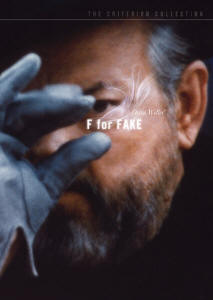
orson welles' F FOR FAKE (1974)

what a strange cat Orson Welles was. F For Fake isn't so much a documentary or even an essay as a hyperactive meditation on trickery and fakedom; Welles imposes an assaulting, visually and narratively convoluted approach on what begins a portrait of two master tricksters and eventually devolves into hammy expressionism. but aside from the obvious inflation of the film's running time (there's little more than an hour's worth of good material), the pretentious self-indulgence of it all does nothing to allay his brilliance...or vice versa. IMDb indicates this was his last proper directorial effort, but the bravado that was there from the start still bleeds from every frame decades later.

eli roth's HOSTEL PART II (2007)

it's hard for me to decide just how i feel about Eli Roth, but one thought struck me while watching Hostel II: he's smarter than i am. smarter than me, smarter than his audience, smarter, certainly, than most of his peers in the world of cinematic horror. that's not to say that Hostel's sequel has quite as much going on upstairs as its predecessor's wry politics of exploitation; no, this time around we know the name of the game, if not all the rules, so Roth whittles his goals down to wit instead. it's been clear since Cabin Fever that much of Roth's dangerousness lays in a command of tone that doesn't find terror and laughter at odds with each other - it may be comic, but it's not relief. (i think an understandable misperception of "flippancy" is what sends so many film critics, who should at least acknowledge the man's craft, into indignant Culture Critic mode. c'est la vie.) here, of course, there isn't much room for overt textual humor, but Roth's ruthless talents still bring a giddiness to the proceedings, from his carefully ironic sense of montage to a narrative that consistently delights in subverting our lazy Horror Flick expectations on several levels, often at once.

oddly enough, it's these stymied conventions (in collaboration with Roth's stomach-turning fearlessness) that give Hostel II such an atmosphere of doom. our protagonists' fates aren't going to hinge on the stupid decisions that drive so many slasher films, nor will they escape by pure luck or panicked cunning; their doom is signed, sealed, and delivered the moment their passports cross the hostel's front desk. but within these confines, the audience, too, is cornered, subject to the film's cruel, largely unpredictable whims, from the harrowing, nauseating Bathory centerpiece (followed, true to form, by a sharp Eisensteinian gag) to the mercilessly nutty ending. Hostel II is in no uncertain terms unfit for general consumption, but it also reaffirms Eli Roth as horror's reigning enfant terrible, revitalizing the stagnant gere while beating its hacks at their own game.

Friday, June 08, 2007

toshia fujita's LADY SNOWBLOOD (1973)

as easy as it is to see the Lady Snowblood influence in Kill Bill, it's even easier to see why. on one level, it's a typical revenge story, as a young woman born to reap revenge stalks the aging bandits responsible for the fate of her mother and would-be father, and gallons of spewing, strawberry-hued blood are presumed to fill the void carved out by shallow characters and unimaginative scenario. but there are isolated moments of wit, creativity, and distinct visual panache (Fujita's composition and control of color can be inspired, though my favorite single image is young Snowblood's ponytail whipping around as she rolls down the hill in a barrel) and the explicit four-act structure is only slighty offputting narratively. it's not a great film, but there's a lot of ideas, and a fair bit of revenge-fueled fun.

Tuesday, June 05, 2007

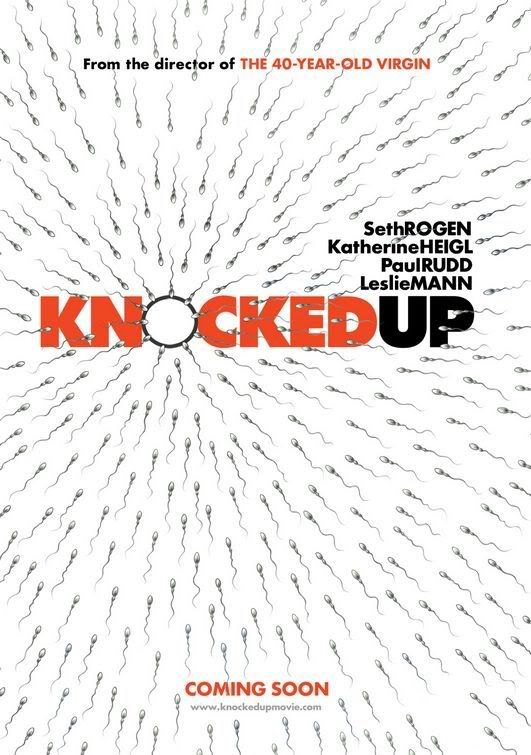
judd apatow's KNOCKED UP (2007)

after Rock Hunter so impressed me, it's nice to see a contemporary comedy with a little respect for its audience, and for the medium. Knocked Up is heavier and looser than Apatow's The 40-Year Old Virgin, but the somewhat lower concept serves his honest, character-driven humor fabulously; it's exhilirating to see a film unleash such relentless howlers without stooping to the contrivance (and mean-spiritedness) that taints so much mainstream comedy. (there's some pop culture humor that may or may not date well, but it stems from the characters, and where their conversations and in-jokes might believably stray, as opposed the reference-fest dreck of "Family Guy" or, say, the Shrek movies.) but Knocked Up is in essence as much a relationship drama as a bawdy romantic comedy, and Apatow's keen verisimilitude proves just as strong an asset on the serious side of things - undoubtedly the key to his strengths as a humorist. the two couples at the center of the film are painfully sharp sketches of both the politics of modern romance and the precipitous psychological divide between men and women, and each character is written with a careful emotional intelligence. a lot of recent screen humor has trended toward the exaggeratedly uncomfortable comedy of errors, but with Knocked Up Judd Apatow outdoes the best of them not only in sheer laughs, but also, and more profoundly, in a spirit of fearless insight.

Thursday, May 31, 2007

frank tashlin's WILL SUCCESS SPOIL ROCK HUNTER? (1957)

i'd been curious about Tashlin since reading his name mentioned in the same breath as Tati's, and Rock Hunter didn't disappoint, though i couldn't have known what to expect. with precious few exceptions, nimble comedy and "serious film" seem to have gone their separate ways decades ago, so it's always a joy to discover an auteur like Tashlin with such carefree aptitude for it; it's true that he betrays a background in animation through his pacing, control of the frame, and mildly surreal zaniness, but what's most impressive is how he manages to fold it all into an affable (but wholly sharp-witted) consumerist/celebritist satire with such little trouble. i'm eager to see more of Tashlin's work, Jerry Lewis be damned.

Monday, May 28, 2007

gore verbinski's PIRATES OF THE CARIBBEAN: DEAD MAN'S CHEST (2006) and AT WORLD'S END (2007)

the first Pirates Of The Caribbean film was, against all logic concerning how good an adaptation of a theme park ride ought to be, a hell of a good time at the movies. cautionary tales like Cutthroat Island aside, it's almost suspicious that it took until 2003 for Hollywood to trot out a big, dumb pirate movie revival, but they got it right, exploring and seemingly exhausting nearly every idea we could have wanted to see in a $140 million supernatural swashbuckler. the last ten months, though, suggest that screenwriters Ted Elliott and Terry Rossio had enough material for three or four more films...and chose to cram them all into two.

neither of the sequels is bad, of course. both are just as entertaining as the first, and do their duty as sequels to up the ante with new characters and increasingly strange voyages. but the narrative thread Elliott and Rossio have split between the two films is so crushingly maximalist that it often verges on collapse, and occasionally pulls the films down with it. on one hand, they've built an impressive self-contained mythology, rewarding those viewers who pay closer attention to the films than may seem necessary; on the other, the films sometimes have trouble staying afloat carrying such convoluted cargo. no less mutinous is the six-act structure of the story, which in retrospect leaves far too much hanging in the balance between the two films for either to feel complete in and of itself -- the "see you and your money next summer for the rest of the movie" angle does more than anything else to insist on the films as simple commerce instead of carefree entertainment.

yet i can't help being impressed by Gore Verbinski, who has shown himself to be an extremely talented, loving shepherd for mainstream cinema, from his astouding translation of The Ring to Pirates' giddy spectacle. he doesn't quite have the storytelling chops to rival Peter Jackson's grab for Spielberg heirdom, but keeping everything so engaging amidst the narrative chaos (even during World's End's laborious, 45-minute long climax) is a feat no simple technician could have gotten away with. added to Rick Heinrichs' pitch-perfect production design, uniformly stunning effects work, Keira Knightley's insuppressible good looks, and the combined scenery-chewing of Bill Nighy, Geoffrey Rush and Johnny Depp, it would be somewhat of a feat to dislike the films outright; here it will have to be enough that the good far outweighs the bad.

Wednesday, May 16, 2007

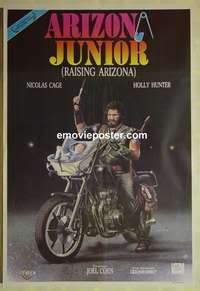
the coen brothers' RAISING ARIZONA (1987)

as the Coens' mainstream debut, Raising Arizona is a work of extreme gall, an assured live-action cartoon that sees their comic sensibilities emerge full-grown. the most impressive thing to me has always been the opening sequence, as Nic Cage (never better than he was here) narrates a relentless expository montage of visual wit and assured scene-setting that maintains its energy to the bitter end, as the opening titles finally cease the fast-forward. but the film as a whole is vintage Coen: brilliantly dedicated performances, warm eccentricity, and a script as poetically airtight as it is madcap.

Tuesday, May 15, 2007

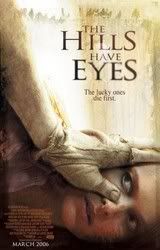
alexandre aja's THE HILLS HAVE EYES (2006)

this is one of the very few films i've ever walked out of at the theater. it was on kim's initiative, but i can't say i wasn't myself inclined - and it's for that reason i've retained a curiosity about The Hills Have Eyes. i've got a reasonably high threshold for Horror's darker territories, but the film exists in such a perfect storm of nihilism and moral filth that it very honestly, deeply offended and affected me, and because of that i've no place denying it as a work of art. poor existential taste does nothing to dull Aja on a technical level; he stretches the first act out almost unbearably, but does so with such confidence that doom's dull roar has grown deafening by the time the film's brutal, balls-to-the-wall centerpiece siege yanks the narrative into oppressively high gear. part of me was bothered by the genuinely crass sexual violence, uncomfortably misogynistic in its deployment as little more than a cheap scare amplifier. but another part of me was terribly compelled by the film's sullied slickness and fearless sociopathy, and how they dare to combine in the form of entertainment.

watching the rest of the film from where i left off more than a year ago, it's an inevitable disappointment that soon afterwards The Hills Have Eyes declines into a Troma Team remake of Straw Dogs, and never again reaches the fever pitch of the scene that sent us (and another couple a few rows behind us) back to the lobby. it's still engaging, and fx stalwarts KNB work their usual magic on the desert colony of sun-baked mutants, each uniquely horrific. but after the tension and release of the first half, the rest of the film can't help but color pretty much within the lines, which makes it a little harder to hate, and much harder to respect. still, it's been a long time since a horror movie bothered me as badly as Aja did here, and on its own terms that makes it a roaring success.

Friday, May 11, 2007

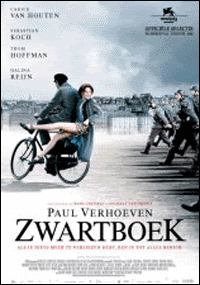
paul verhoeven's BLACK BOOK (2006)

Paul Verhoeven’s career arc has been a strange one: after establishing himself in the Netherlands with thrillers like Soldier of Orange and The Fourth Man, he arrived in hollywood to direct a curious, sensationalistic string of popcorn movies belying an obsession with the extremes of both violence and sexuality. some were good (Robocop and Starship Troopers are as fun as sci-fi satire gets) and some weren’t (remember Hollow Man? on second thought, don’t) but all of them reflect surprisingly deeply on a slick artist undaunted by america’s cineplex conservatism. And though it was perhaps inevitable that Verhoeven would return to Europe and his filmmaking roots, few could have expected the resulting Zwartboek (Black Book), which stands as one of his finest achievements even as it out-hollywoods his american work in many key ways.

Black Book tells the story of german jew Rachel Steinn (Carice van Houten) as she hides out among the dutch resistance toward the end of world war II, gradually taking on an active espionage role after she befriends german officer Ludwig Müntze (The Lives Of Others’ Sebastian Koch) and is offered a job inside SD headquarters. to elaborate much further would be both confusing and a disservice to the film, as Verhoeven and co-screenwriter Gerard Soeteman pack the film with a serpentine, almost Hitchcockian series of twists and turns that constantly confront Rachel (spending most of the film under the pseudonym Ellis de Vries) as she pursues not only safety but justice.

being a Paul Verhoeven picture, of course, the film is steeped in both graphic, affecting violence and unabashed sexuality, but where his american work seemed to revel in its excesses and indulgences, Black Book folds these preoccupations organically into the story, and lets Verhoeven concentrate on its telling. and it’s here that the hollywood influence shows – not in any of the ways his american films might suggest, but a more classical sense, from the austere period sensibility and low-key glossiness to Anne Dudley’s pitch-perfect score and van Houten’s rapturously confident, star-making performance. the most potent contribution to the film’s americanized aesthetic, though, is a decided emphasis on entertainment over the themes and grand ideas we’ve come to expect from european resistance dramas: Black Book is a thriller, plain and simple, and a rousing one at that.

still, there’s a creative maturity in the way such an entertainment is approached. sentimentality is one hollywood tradition that Verhoeven never had much use for, and Black Book is little different in that respect, putting forth a comparatively chilly narrative tone that doesn’t manipulate its audience by lingering unnecessarily on the emotions in play. one of the more obvious dividends of this approach is an enhanced brutality, most noticeable in the harrowing firefights but also observable on an emotional level throughout the film, particularly in Rachel’s subtly escalating psychological humiliation at the hands of the SD officer unknowingly responsible for her family’s deaths. more crucially, this lack of sentimentality also allows for an enriching idealistic relativism; both the subtext and the story itself are informed by the notion that all people, even in times of such great wickedness, tread the gray waters between good and evil.

(from the KNOXVILLE VOICE)

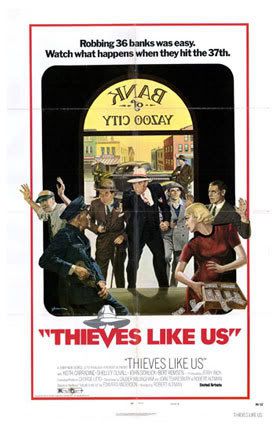
robert altman's THIEVES LIKE US (1974)

this came out on DVD two weeks ago, but apparently not in Knoxville, so i had to catch it in lousy, compressed full-frame on cable. still, it floored me: as with most of his early work, Altman approaches a well-trod premise (here a tale of Depression-era bank robbers) from an angle that momentarily perfects it. he compensates for a necessarily restrained visual approach by playing with diagetic sound much in the way he did in MASH, but to a different end; where MASH's loudspeaker announcements helped reinforce an ironic distance, Thieves Like Us' omniscient radio crackle pulls us in emotionally while serving its more basic (and equally effective) role as aural set dressing, perfectly evoking a time and place. the film takes on an easygoing, naturalist pace, budgeting more time for scenes of silence and quiet psychology than it does for its antiheroes' antics, and accordingly telling an old story as well as anyone ever has. but it still takes itself seriously as a crime film, albeit a different sort of one, as Altman's primary preoccupation seems to be the state of mind that forces three men to define themselves according to their sociopathic behavior. the film's title weaves itself informally and offhandedly through each character's speech over the course the film, and even as the most sympathetic of the trio (a superb Keith Carradine) goes through the motions of grasping at legitimacy through the strength of young love, we realize along with him that he's not built to be anything but lowdown. it's sad, yes, but it's also as close as Altman has come to naked reality.

Saturday, May 05, 2007

sam raimi's SPIDER-MAN 3 (2007)

what happened here? the third Spider-Man seems to have been systematically purged of everything that made the second one such an unmitigated creative success. attention to character, thematic unity, careful pacing, performance, and, most crucially, expert storytelling...every one jettisoned in favor of bloat and lazy spectacle. it's not a bad film, really, but it wrestles fruitlessly with a mediocrity that, at this point in the series, should never have been part of the equation. (i'm tempted to elaboate on its weaknesses, but it would be little more than a long list of the small mistakes and miscalculations that undermine the film from start to finish.) Spider-Man 3 is a $250 million dollar first draft of what it could have and should have been, and nothing less than a colossal disappointment.

Wednesday, May 02, 2007

doug liman's MR & MRS SMITH (2005)

i'll take another gimme on this one. it's a narrative mess, but the script plays pretty sharply with gender politics, the leads look good together, and there's a pretty burly car chase.