Tuesday, March 27, 2007

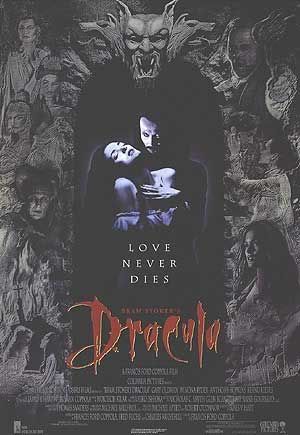
francis ford coppola's BRAM STOKER'S DRACULA (1992)

(or most of it, at least.)

it's so curious to me that someone like Coppola, surely a master right out of the gate in the early 70s, could be guilty of the poor filmmaking taste on display here. his intentions for the picture are obvious (expressionism, lush design and color, gothic romanticism) but recklessly undone at every turn by distressingly uneven production values (DP Michael Ballhaus seems to bathe every third shot in ugly, inappropriate natural light) and a distinct disinterest in cultivating a tone (any tone!) capable of keeping the story afloat. the movie simply ping-pongs back and forth between austerity and camp, using neither to its advantage. and while Gary Oldman and Tom Waits are able to manage James Hart's fatally unimaginative script, the rest of the cast struggles, particularly Keanu Reeves, who in all fairness would probably struggle on Days Of Our Lives. Dracula feels like an uninspired first draft of what it seems like a Coppola vampire movie ought to be.

"the horror...the [inept, simulated] horror..."

Friday, March 23, 2007

alfred hitchcock's TORN CURTAIN (1966)


it's a shame that the modern thriller has so largely abandoned the pioneering Alfred Hitchcock did in its name throughout his career. even a minor Hitchcock like the brainy cold war thriller Torn Curtain (ranked as his 39th best film by IMDb!) presents at least three or four direct testaments to his preternatural skill for lacing scenes with suffocating suspense, no matter the surroundings. footsteps in a museum, an ersatz bus route, even a chalkboard equation showdown between two scientific minds - Hitchcock transforms each of them into scenarios as unbearably tense as they are goddamned entertaining. he doesn't cheat, or cut corners...we are always assured that he's in total control, using every situation to his advantage. the film is not perfect, of course; the logic and motivations, particularly as they pertain to espionage, are a little shaky, and a poignant but unnecessary encounter with a strange Polish woman stops the otherwise action-packed third act dead in its tracks. but there's still so much to learn, and so much to enjoy! even Hitchcock's non-canonical work looms over the genre his absence ruined.

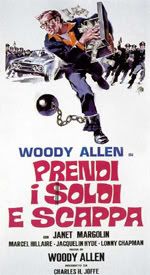
woody allen's TAKE THE MONEY AND RUN (1969)

this is Woody's first film, and it shows; while all of his directorial work through 1975's Love And Death can be reasonably described as little more than jokes strung together on film, Take The Money And Run is by some measure the most rudimentary in its approach. not that there's anything wrong with it, of course! the mockumentary frame is an able vessel for the disjointed setup-punchline-proceed approach, and it's interesting to observe some of his sensibilities (at least pertaining to said early work) emerging fully-formed while others develop as we watch. as debuts go, it's great, particularly the full-speed-ahead pre-title sequence.

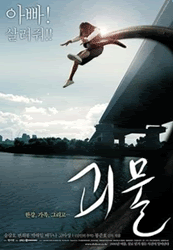
joon-ho bong's THE HOST (2006)

Where have all the monsters gone? In recent years horror film has enjoyed the same sort of resurgence it seems to experience every decade, but world events in the meantime seem to have altered its cultural purpose. Where the 1980s gave us the popcorn franchise frights like the Friday The 13th films and the mid-nineties saw Scream beget a string of deceptively tongue-in-cheek (though largely unfortunate) teen slasher flicks, the most current crop has little use for irony or escapism, instead relying largely on moral desolation and crass brutality, as if we pay eight dollars on a Friday night to confront our heightened anxieties rather than forget them. Sadly, this emphasis on monstrousness has also left little room for the sort of monsters that defined the genre, monsters who now find superior purchase in fantasy (King Kong) and even the family film (Wallace & Gromit: The Curse Of The Were-Rabbit.)

This decided shift in horror cinema’s fabric only strengthens the achievement of Bong Joon-ho’s playful, unpredictable The Host, a Monster Movie in the most grand, classic sense. The highest-grossing film in the history of its native South Korea, The Host opens (after a short prelude) on a sunny Seoul afternoon as snack bar operator and single father Park Gang-du (Song Kang-ho) witnesses an enormous reptilian fish creature emerge from the Han River and rampage through a riverside park, taking his daughter Hyun-Seo with it as it finally resubmerges. As public panic ensues, exacerbated by the government’s revelation that the creature is host to a deadly virus, Gang-du and his family are forced to flee the quarantine in order to find Hyun-Seo.

That we see the monster in broad daylight for an extended sequence within the first few minutes of the film not only signals Bong’s rightful confidence in his distinctive, creative creature effects (handled impressively by the California-based Orphanage), but also a promise that the rest of The Host is happy to deliver upon: the rules are made to be broken. The horror film (and by extension the monster movie) has historically been a breeding ground for cliché, but the Park family’s saga seems to openly refuse and defy the genre’s baser conventions, from the organic, internally logical plot to the warm, emotional tone of the character work. The suspense and scares, too, are genuine; where many films have slouched into the routine of “loud sound / cue bad guy”, Bong steadfastly refuses to cheat his audience. Most importantly, the film’s emphasis on familial love and loyalty unsurprisingly lends the inevitable deaths a consuming gravity, a trait sorely missing from The Host’s hollow, crass horror contemporaries.

What makes the film most notable, though, is that it seems to single-handedly spit the monster movie squarely into the 21st century. These stories have always been reflections of deeper fears, from Shelley’s science-panicked Frankenstein to the poignant post-nuke anxieties that inform Japanese creations like Godzilla; here, too, Bong addresses his culture’s concerns, particularly as they relate to biological dangers. In the face of a horrific creature haunting the waters of the Han, the government seems more immediately concerned with the virus it apparently carries, and dedicates their resources toward a strict quarantine while Gang-du and his family are left to deal with the beast by themselves. This uncareful alarmism, coupled with the unmistakable iconography of the SARS and Avian Flu outbreaks, gives the film’s underlying unease a solid base in recent cultural psychology.

The Host is also amusingly contemporary in its portrayal of its few American characters. Our government and military play a key role as the story progresses, and Bong’s script (with Baek Chul-hyun) approaches our own cultural idiosyncrasies with a keen satirical eye that never steps out of line into demonization, just as he ribs his own South Korean government. The whole script, in fact, is filled with an endearing, witty goofiness, sharp yet warmhearted. Several reviews have made lofty comparisons to Jaws and Jurassic Park, and the similarity extends beyond their respective places in the monster movie canon; much of The Host draws carefully but cheerfully on Spielbergian populism.

As The Host rolls out its American release to reportedly enthusiastic audiences (the first showing at Nashville’s Belcourt sold out days in advance), it’s enticing to think about the return of the monster movie, or even a shift in horror’s stagnant course. But to hope for such things is to downplay The Host’s tremendous uniqueness: funny, smart, original, beautiful, and scary, it’s an unusual creature in its own right.

(from the KNOXVILLE VOICE)
Saturday, March 17, 2007

craig brewer's BLACK SNAKE MOAN (2007)

Sam Jackson has fallen prey to an unfortunate curse over the past few years: his reputation as a reliable, inimitable performer has led to a string of lazily conceived and written roles that rely on him to do all of the heavy lifting. nevermind that, given the right material, he's one of our great actors - just throw a little extra profanity in the script and start shooting. whether it's Snakes On A Plane, XXX, or even a Star Wars prequel, we aren't thinking about Sam Jackson's character. we're just thinking about Sam Jackson.

thankfully, Craig Brewer's vibrant, dusty Black Snake Moan temporarily lifts the curse, giving Jackson a role that caters to his strengths as an actor rather than a Badass. though the provocative ad campaign suggests pulpy exploitation, the film is really a story of sin, fatherhood, and the blues, with Jackson at the center as Lazarus, a jilted Southern farmer who decides to take in a battered local harlot and cure her of her "wickedness." not that Lazarus is a prude, or a zealot; in fact, much of the film's beauty stems from his complicated, obscured motivations. his Christianity runs deep but stays deep, and he pines for his two-timing wife and the child she never let into the world. most of all, though, he exhibits a deep understanding of sin - not as an arbitrary religious concept, but as one of the forces that turns the world.

for all of these reasons and more, Lazarus decides to chain Rae (a waifish Christina Ricci) to his radiator in order to save her from her own demons, which she has neither the wisdom nor the inclination to bottle. this central plot point is, of course, loaded both racially and sexually, but the script treads surprisingly lightly while never chickening out. there is a grimy sensuality to much of the film (mostly due to Ricci's half-clad fearlessness), but it is very rarely sexy; Brewer stays true to his themes by steering clear of titillation where lesser talents would have their cake and screw it too. indeed, the strange, tense chemistry between the Rare and Lazarus eventually (and organically) defuses into a warmly rendered father/daughter dynamic on which the remainder of the film coasts to a refreshingly hopeful denouement, suggesting that even god's most flawed children are entitled to a shot at happiness.

Black Snake Moan shares two key elements with Hustle & Flow, Brewer's previous feature, that seem to define his sensibilities as a filmmaker. the first is the South, so rarely presented onscreen with a depth and regard befitting the heart and soul of true American cultural tradition. the second, and more profound, is music: Hustle & Flow tracked the struggle of a lowlife pimp who finds sadly tentative redemption in the arms of crunk rap, allowing him to redefine himself through the creative process, while Black Snake Moan concerns itself with the Blues, both as musical expression and an ineffable state of mind. the score and soundtrack bestow the film with considerable texture, but it's Lazarus' own blues that stay with the viewer - a further credit to Jackson's layered performance. that his voice doesn't necessarily fit with the bluesman ideal (aside from a sublimely menacing rendition of "Stagger Lee") seems immaterial when it emerges from Lazarus' troubled mouth, and two of the film's most exhilirating sequences respectively embody a tension and release that burrows to the heart of the narrative. in one, Rae clings tightly to Lazarus' leg as he drowns out a thunderstorm with the harrowing title track; in the other, Lazarus returns triumphantly to the juke joint he once haunted and plays to an audience ecstatic in the proposition of transforming his sorrows into the joy of shared expression. the music makes clear what the film sometimes fails to: in the absence of true happiness, we can find relief in art and expression, and the best blues are blues shared.

Friday, March 16, 2007

woody allen's SCOOP (2006)

after the unqualified artistic success of Match Point, which caught even the most apologist of his fans off guard, Scoop unfortunately finds Woody trying once again to simply keep his head above water. to its credit, it's pleasant (after the dreadful, grating Anything Else, that in itself is a godsend) and Allen seems more comfortable here than in Curse Of The Jade Scorpion using whodunit conventions as a frame for comedy. but as with most of his later, lesser work, much of the humor is conspicuously laborious, and does no favors for muse-du-jour Scarlett Johansson, whose tenuous but endearingly awkward read on her character is repeatedly torpedoed by bum gags. Ian McShane shines in an unfortunately minor role as a dead reporter, and Hugh Jackman is charming as a suspected murderer of prostitutes. hell, even Woody himself seems more comfortable onscreen than he has since Small Time Crooks. but the material's just not there, and so the slide regretfully continues.

Thursday, March 15, 2007

david fincher's ZODIAC (2007)


you'd never guess watching Zodiac that David Fincher hasn't made a film in half a decade; in fact, the enormous maturity of craft on display would suggest that he's spent the interim doing nothing but. he approaches the material with a confidence almost entirely removed from the marvelous (but showy, and distancing) technicality of Fight Club and Panic Room, resulting in a powerful, eminently engaging piece of true-crime police procedural rooted in the experience of three characters, each obsessed to different degrees and ends with deciphering the puzzle of the Zodiac killer. (the grander puzzle, that is; the cyphers are little more than a red herring.) this is an obsession we've seen onscreen before, of course, but Fincher breathes new life into it, even while wrestling with a story that weaves between countless secondary characters and spans more than twenty years. even more impressive is the unlikely coup of making a nearly three-hour serial killer film with maybe five minutes of violence and no resolution into such a pleasant, absorbing work, and here the credit must be spread around from Fincher to his stellar cast and James Vanderbilt's smart screenplay, possibly most notable for it's surprising, winning humor. Zodiac respects its audience to a degree we rarely see in mainstream crime drama, and it's impossible not to return the favor. this is the best film of 2007 so far, and probably won't be topped for months.

Tuesday, March 13, 2007

zak snyder's 300 (2007)

300 has considerably more in common with Robert Rodriguez's Sin City than just shared creator Frank Miller. both are heedless orgies of violence, both are markedly stranger than most films that achieve such popularity, and both are towering visual achievements borne of the confluence of CG filmmaking's final maturations and the box office vogue of comic book adaptations. but the best way to approach discussion of 300 isn't the similarities between the two projects, but rather their key difference: Sin City is a story, with characters, emotions, and motivations, however depraved, and the books' visual and storytelling sensibilities are rooted quite firmly in the seedy stomach of film noir, making Rodriguez's task more akin to retranslation. Miller's crude, majestic impressionist eulogy to the 300 Spartans, however, is an achievement precisely because it's unconcerned with the nuts and bolts of plot and conventional comic book storytelling, opting instead for somber spectacle.

and what spectacle emerges from Snyder's adaptation! the film is entrancing visually, even if the bulk of the compositional verve comes straight from Miller's pages. the human form and the macabre ballet of antiquity's combat are on full display in every frame, and though it's color-corrected and cg-airbrushed all to hell, the aesthetic never falters. the guitars chugga, the troublesomely Other eastern hordes charge, and we're dipped and twirled from slo-motion into slo-er-motion. the figures in movement do Miller's images enormous justice, and in this most important respect the adaptation is a complete success.

what they've adapted, though, is tragically unsuited to feature film from a narrative point of view, and offputtingly dull as a result. though certainly cinematic in nature, 300's structure and flow operate on atypical terms, and Snyder's direct reading turns a rage-blind eye to the inherent dramatic hurdles, hoping to coast by on panache alone. but lacking even cursory investment in our heroes and their impossible quest, we begin to feel that the film is progressing by simple blueprint, like a bedtime story halfheartedly read. so what's been achieved? what's the point of Snyder basically tracing 300 onto a computer screen?

the ideas that emerge amidst the bellowing and bloodshed have created a minor stir in the leadup to the film's release. in one sense, of course, any comparisons to be drawn between 21st century geopolitics and the battle of Thermopylae are history's fault alone. but the film is still a product of its own time, and 300's most potent surprise turns out to be its ringing endorsement of american warmongering. though Leonidas' hubris is as bare as his torso, it's treated more as a quirk than a vice; as the Spartans and a trifling coalition fight off warriors from an unfamiliar (and thus foul) place, the real value is placed on bravery and nationalism. and back in Sparta, an unscrupulous opponent of the ill-advised pre-emptive combat turns out to be literally working with the enemy. though these certainly aren't the type of ideas that need to be perpetuated, especially subconsciously, there's a strange courage in the film's defiance of leftist Hollywood convention. otherwise, 300 is nearly entirely an exercise in style, executed with an outrageous pomposity and visual mastery. eclipsed by a story poorly told, however, Miller's impressionism just becomes Snyder's impression.

Wednesday, March 07, 2007

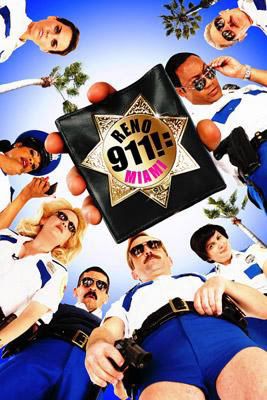
ben garant's RENO 911!: MIAMI (2007)

it's always nice to see the folks from The State perpetuating their influence on the world of comedy, but there's a reason that Reno 911 has met so much more mainstream success than other post-State projects: it's comparatively safe. the show's base concept is excellent enough to allow for a healthy dose of weirdness without alienating their audience, of course, but put next to the absurdism of Stella and deep comedy of Wet Hot American Summer, it's downright pedestrian. it's never bothered me in the slightest until now, though, as i sat through the hilarious trifle that is Reno 911: Miami. overlong by half at 84 minutes, the film plays just like any given episode of the show, except unbleeped, unblurred, and with a slight pretense of plot; it's extremely funny a lot of the time, but the improv inevitably precludes competent feature pacing, so the only real thing we get from the movie that we don't get from the show is occasional boredom. what made me think about Reno 911's shortcomings as a State successor, though, is imagining the film that could have been had they opted to take some chances, like taking the same few broad plot elements and building them into a scripted cop drama, coincidentally starring the hapless Reno sheriff's department. not everyone might have gotten it, sure, and some of the show's spirit might have been sapped away by a real script. but at least it wouldn't have been such a blatant non-effort at adapting the show to the screen.

Sunday, February 25, 2007

james gunn's SLITHER (2006)

horror comedy is a strange beast. there's no shortage of lovable films among its best examples, but very rarely is a workable balance struck that lets the film sit comfortably astride the two genres; most are either horror films playful enough to sustain humor (Dead Alive, Evil Dead II) or comedies goofing on horror, however effectively (Ghostbusters, Shaun Of The Dead), leaving us to draw the conclusion that the dichotomy between fright and funnybone is, in the end, too vexing to avoid choosing sides.

James Gunn's gross, giddy Slither insists otherwise, operating not only as a tremendously funny low-key comedy but also a genuinely accomplished horror flick. a fair share of the credit for this goes to the inspired cast, great special effects and Gunn's impressive debut behind the camera, but the real asset is his script, which strikes and sustains a tone that nurtures both genres without allowing them to interfere with each other. the key to its success is a deep wit extending beyond the comedic elements ("sheriff, what's a 'gina?" "it's...a country. where Ginese people come from.") into the fabric of the film itself, allowing Gunn to take a well-worn scenario from the annals of 80s B-splatter and lace it with a smart self-consciousness that keeps the scares real by never stooping to simple parody. the emphasis on the gross-and-creepy m.o. of Slither's forebears rather than the gory-and-sadistic scares of its contemporaries also does the film innumerable favors, particularly as it toys endearingly with the genre's sexual and phallic tropes, reduced so sadly to crass distastefulness in recent horror. all of these clever decisions culminate in an obscenely satisfying and entertaining work, impeccably paced (a decided strength in both comedy and horror cinema) and playfully executed. (two of the film's most effective sequences are absolute models of the power of cross-cutting.) given the dominance of horror films over the past few years, it's both a shame and a surprise that this film wasn't better-received upon its release, but it's a consolation that it seems destined for cult appreciation, placing it among the distinguished company it deserves.

Thursday, February 22, 2007

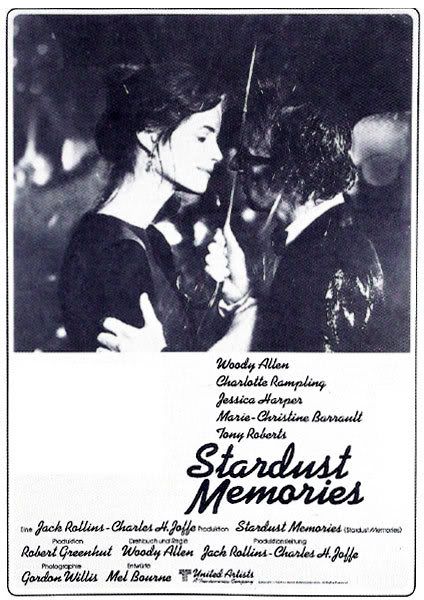
woody allen's STARDUST MEMORIES (1980)

one of the things that makes Woody Allen one of our most essential filmmakers is the self-reflexivity of his art, an almost desperately rare characteristic in American cinema. nowhere is this more evident than in Stardust Memories, in which he plays a director beleaguered by his transition from light comedy to serious film; his self-examination here extends beyond his typical preoccupation with his own personal neuroses (familiar to anyone who's seen more than a handful of his films) and into his experience as an artist, and even into the artifice itself. visually, the film is a shamelessly direct homage to Fellini's , but any incumbent hubris is defused by a graceful self-consciousness. (at this point i've officially exhausted the "self" prefix.) Allen fills his frame with faces and characters straight out of a surrealist sketchbook, all hounding his director with banality and non-sequitirs as he attempts to navigate the landscape of a weekend tribute to his work, and he is repeatedly forced to deal externally with the questions about his life and work that surely plague him privately. and though this portrayal of his fans occasionally veers into meanspiritedness (Allen transparently insists that the film is not a dig at his own fanbase), it rings extremely true, and is consistently entertaining. his enthusiasts and detractors aren't the only source of his torment, though; the film's most stylistically and emotionally exhilirating moments center on three objects of his affection, each respectively embodying the past, present, and future. it's in these moments (many of them told in the random but fluid flashbacks he perfected in Annie Hall) that Allen's craft really stands up for itself amidst the story's unflinching look at what it means for an artist to earn and assert his maturity.

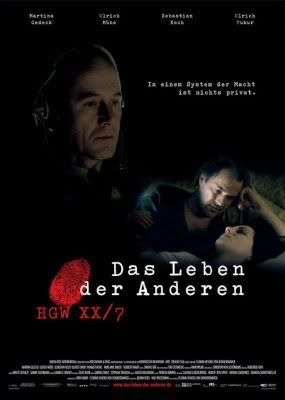
f.h. von donnersmarck's THE LIVES OF OTHERS (2006)

The rise of totalitarianism in Europe following the First World War has been an understandably central preoccupation in Western culture over the past century, and cinema, our youngest art, has proved among the most impressionable in its wake. From propaganda to popcorn flicks, the physical and psychological violence of our collective experience with—and within—oppressive states has resulted in countless films both important and entertaining, and this spectacle of a history filtered through celluloid has created and refined for us an iconography of good, evil, freedom and fear. We’ve been less receptive, however, to the notion of idealistic defeat, and thus those regimes (Franco, the Soviets) that survived the 1940s have, beyond a Cold War mentality rooted as much in nuclear paranoia as anti-Communism, been downplayed as they fell into slow decline toward the end of the century.

It’s from this twilight that German director Florian Henckel von Donnersmarck conjures his award-winning debut feature, The Lives Of Others (Das Leben der Anderen). His low-key approach to the material serves its setting well, drawing the slow crumble of East German communism into psychological focus through the story of a playwright, his muse, and the government agent assigned to eavesdrop on their every word. As it begins, Stasi captain Gerd Weisler (Ulrich Mühe), a ruthless interrogator and an academy instructor to secret-police cadets, is approached with an assignment undoubtedly common in 1980s East Berlin: overseeing the surveillance of a suspected subversive, writer Georg Dreyman (Sebastian Koch). Weisler dutifully accepts, and begins gathering tentative evidence of Dreyman’s reserved dissidence, but playing voyeur to the intellectual and emotional lives of Dreyman and his live-in girlfriend, Christa-Maria (Martina Gedeck), quickly yields unexpected results: Weisler’s own subdued, solitary existence, defined only by his role in a decaying regime, contrasts starkly with the intimacy and relative happiness of his charges, and so he is driven from fascination to envy, and from envy to empathy. He listens, rapt with attention at his attic desk, as Dreyman plays the piano, and Weisler even ventures into the apartment in their absence, examining a wooden salad fork, given as a birthday present, for the “beauty” with which Dreyman has described it.

Refreshingly, this obsession never delves into any of the boring perversity we’ve come to expect from such movies, but instead emerges as the moral and ethical crux of the film. (Though subplots concerning a coerced affair and an illicit manuscript occasionally tear the narrative away from Weisler, it’s very much his story.) As von Donnersmarck’s quiet thriller begins to close in on its characters, Weisler finds himself torn between his allegiance to his country and his own realizations about human nature and dignity; even as he is bound by duty to preside over one character’s eventual betrayal of another, the look in his otherwise cold eyes suggests that he, too, has been betrayed.

Weisler’s story is, of course, also the story of East Germany itself as it woke from a 40-year nightmare. Thankfully, von Donnersmarck approaches the material with a delicately humanist social realism that keeps the film from wallowing in its allegory. It’s not hard to imagine the characters drawn in broad strokes by less careful hands (archetype dictates Weisler as a tragic figure and Dreyman as a brave, brash reformer) but here both are suitably complex to sustain the film’s introspective tone, which makes its points without lecturing. The visual approach is similarly restrained, as the largely static frames take us back and forth between the warmth of Dreyman’s apartment and the shivering, empty streets and corridors of East Germany.

It’s this restraint, though, that ultimately prevents the film from being as engaging as it might like to be. Whether Weisler’s general quietude is his own true nature or just a by-product of his position, his character arc is often confoundingly introverted, and while we’re interested in Dreyman and Christa-Maria, the nature of the story holds us at arm’s length, and our concern remains solely intellectual. It doesn’t help that the two-hour-plus film is conspicuously stingy with its levity, nor that its epilogue, while stopping thankfully short of sentimentality, closes the film on a mildly unsatisfying note.

Despite these missed connections, The Lives Of Others has a lot to say about a painful period in Europe’s history largely unexamined on film, and first time writer/director von Donnersmarck makes an impressive, gently assured showing that’s earned awards the world over, most recently beating out multiple-nominee Pan’s Labyrinth for the Best Foreign Film Oscar. Although it lacks the bravura and brilliance of Pan’s superior Fascist fable, the two films share a message common and essential to all of the art that has helped us survive the last century, and all the centuries before that: humanity prevails.

(from the KNOXVILLE VOICE)

Tuesday, February 20, 2007

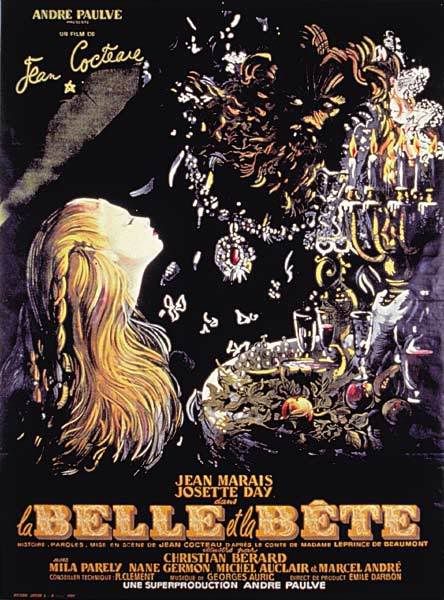
jean cocteau's BEAUTY AND THE BEAST (1946)

this work of strange beauty was the other film i was privileged enough to see on a fresh 35mm print at the Janus retrospective, and it was an utter marvel. Cocteau's control of his craft gives the film a distinct stylistic panache, but the heavy lifting of its visual wonderment is done by the production designers, who produce a mysterious magical castle that is overwhelming even today. (i can hardly imagine how dazzled the audience must have been fifty years ago.) candelabras held by sentient human arms line the corridors, doors open by themselves, and, in one marvelous display of visual wit, a bust sits on its pedestal and watches Belle back and forth as she paces. (one of the other striking things about the film is that it's remarkably biting in its humor.) the beast, too, is amazing to look at, clearly evocative of the two extremes of humanity and beastliness central to the character. most of all, the film is as dark and unsettling as fairy tales ought to be for maximum impact, though it sadly loses its tonal nerve in the ending, which wraps up too quickly and hits insincere emotional notes. still...beautiful.

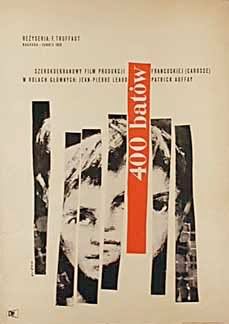
françois truffaut's THE 400 BLOWS (1959) / ANTOINE ET COLETTE (1962)

i was fortunate enough to make it to nashville for a banner day in the Belcourt's "Fifty Years Of Janus Films" series, beginning with a double feature of 400 Blows and its first sequel, a short piece from an international anthology film. i feel self-conscious trying to think of anything to say about a film of Blows' magnitude, so i'll just say that it is indeed one of the more poignant looks at youth i've seen on film. Antoine Doinel is a thief and a liar, but what child isn't, at least to some degree? he's still a creature of dignity. (watch him skip school and return home for the evening, only to run away from home the next night and return to school in the morning! he's willing to give anything a try.) we love Antoine even as his behavior worsens, and his fate is mildly devastating.

but is it? we catch up with Antoine (and, as a pleasant surprise, his chum Rene) several years later in Antoine et Colette, a meditation on unrequited love and the universal difficulty that men have being "just friends" with beautiful women. Michel Gondry's The Science Of Sleep trod similar (though more whimsical) ground last year, but A&C's brevity and understatement makes it even more effective, particularly in its perfect ending. most of all, though, it's nice to revisit Antoine and find him well, if a little lovesick. the end of 400 Blows is infamously wide open, but given the film's progression we're seemingly meant to expect further unpleasantness for Antoine; here we see wonderfully otherwise...Antoine has survived long enough to find out that adulthood is no easier than being a child.

Friday, February 16, 2007

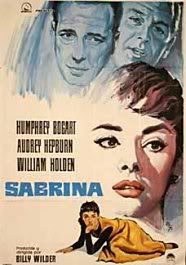
billy wilder's SABRINA (1954)

sad that i'm going to take kind of a gimme on a film by one of my favorites. Sabrina is a little frothier than any of what i'd consider Wilder's best, but it's still a lovely, clever film, and a wonderful way to spend a valentine's evening.