Showing posts with label published. Show all posts
Showing posts with label published. Show all posts
Friday, February 26, 2010

Thursday, January 28, 2010
Saturday, January 02, 2010
back again 2010
ok, so: this blog started three years ago as a new year's resolution, which i kept right up until i got distracted by getting married, then continued intermittently for a year afterward, and then i slowly/abruptly/whichever abandoned it. i've still been writing film reviews for knoxville's Metro Pulse (the films i've written about since my last post here are accessible below) but here's to a new year, and getting back into doing this as well.
first of all, the Metro Pulse year-end list, to which i contributed five entries: Where The Wild Things Are, Crank: High Voltage, Observe And Report, Big Fan and Moon. (for the record Drag Me To Hell, Anvil: The Story Of Anvil, District 9 and Fantastic Mr. Fox would round out the list, with positions shifting according to my mood. i'll leave Number Ten open for stragglers.)
the rest of my year in film writing:






first of all, the Metro Pulse year-end list, to which i contributed five entries: Where The Wild Things Are, Crank: High Voltage, Observe And Report, Big Fan and Moon. (for the record Drag Me To Hell, Anvil: The Story Of Anvil, District 9 and Fantastic Mr. Fox would round out the list, with positions shifting according to my mood. i'll leave Number Ten open for stragglers.)
the rest of my year in film writing:
Tuesday, June 16, 2009
Monday, June 08, 2009


%20poster.jpg)



Friday, February 06, 2009
darren aronofsky's THE WRESTLER (2008)

from this point on (following the sad dissolution of the Knoxville Voice, which i had been writing reviews for) my published articles will have to be linked from their source on the Metro Pulse website. (one of the costs of going corporate, i suppose.)
THE WRESTLER
clint eastwood's GRAN TORINO (2008)
 the first thing we notice, of course, is that cocked scowl. it was there when A Fistful Of Dollars first introduced him to the world, and it's very much there on Clint Eastwood's face throughout most of Gran Torino, the film that will allegedly steal his grizzled visage away from the screen for good; he was handsome once (maybe still) and his features have only sharpened as he's aged, but the sharpest of all is that unmistakable expression. Clint Eastwood, it would seem, is perpetually one step away from giving you the ass-whooping you've always deserved.
there's no denying that Gran Torino's Walt Kowalski (Eastwood, who also directs) has found plenty to scowl about. we first meet him at his wife's funeral, glaring at his bored, immodest grandchildren and listening to the empty words of an earnest rookie priest. receiving guests later that afternoon, he grouses about the crowd in his house and speaks testily to his two sons, who seem no more interested in his grief than he does in theirs. as they finally pull away, the retired auto worker quietly condemns his son's Japanese SUV, spits on the ground, and turns his attention to his neighbors, who have spent the afternoon celebrating a birth.
Walt's problem with these people (if he needs a reason) is the same as his problem with most of his Detroit neighborhood, which has been slowly and steadily overtaken by immigrant communities, particularly the southeast Asian Hmong. a Korean War vet, Kowalski looks upon them with undisguised, bluntly racist contempt, and they're prone to returning his gaze with fascination. Kowalski is, after all, as much a relic as his twin prize possessions: the M1 Garand rifle in his basement and the mint-condition 1972 Gran Torino in his garage.
naturally -- or, if you rather, by considerable contrivance -- our crochety, despicable hero is coaxed into a reluctant relationship with the neighboring Lor family. circumstances surrounding Kowalski's reflexive rifle-wielding confrontation with a gang of Hmong hooligans bring the teenage Thao (Bee Vang) into his home through a customary indentured servitude, while Thao's plucky older sister Sue (Ahney Her) seems to sense the old man's loneliness, and brings him into their home in return.
so there we are: Gran Torino is, at least at first, a film about racism and its reconciliation, with no small bit of the boring baggage that sort of film typically entails. screenwriter Nick Schenck goes to great pains to paint Kowalski as a bigot, but falls there and elsewhere into a tendency to tell rather than show; we are spared honest examination of his mindset in favor of abundant, casual epithets, ugly in the wrong way because they find no weight to carry. there is even a flatly superfluous scene between Kowalski, Sue and some black street toughs, existing only to emphasize the "wow he's racist but those guys were validating his prejudices" angle (as well as the "wow its badass when Clint pulls a gun on dudes" angle, which i have much less quarrel with.)
luckily Gran Torino slowly snaps out of its Crash-Lite sermonizing as Kowalski and Thao's relationship develops, and we come to understand what has drawn Eastwood to this story, particularly as an onscreen swan song. Kowalski's cantankerousness, it seems, is rooted just as firmly in masculine identity as racism, and he goes to increasing lengths to encourage the quiet, submissive Thao to pursue manly self-sufficience, especially when the Hmong thugs (led by Thao's cousin Spider) ride in on the third act.
while Thao remains fairly inert (it's evident that the majority of the Hmong actors are non-professionals) this thematic re-evaluation finally gives Clint something to do besides slur and sneer, and it becomes clear that Walt Kowalski has more in common with Dirty Harry Callahan than just the name on the marquee. the racism, resentment, and resistance to change are all outlets for rage, forged in war and tempered for decades by a manly life but newly impotent in the face of a world moving on. Kowalski clings to his own empowered experience as he clings to his Gran Torino; if he is a relic, he is unashamed.
it becomes clear, then, that Gran Torino is not simply the labored cross-cultural melodrama we've figured it for, but a meditation on a career on the screen, now too in decline thanks to age and changing times; Eastwood may be American cinema's most important masculine figure -- that cold scowl is an iconography in and of itself -- and whether or not his performance lives up to the legend (it doesn't, sorry) he's certainly rooted out a thoughtful curtain call in Gran Torino.
it's a good thing, however, that he plans to continue directing films. once the quotation marks are firmly in place around Walt Kowalski, Gran Torino's lazy character study sputters to a stop, dutifully hitting its marks and building to a nearly surprising ending but apparently content to have left its audience behind in fond daydreams of woolen ponchos and .44 magnums. (maybe we're happier that way anyway?) farewell, scowl, and godspeed.
(from the KNOXVILLE VOICE)
Monday, November 10, 2008
sam raimi & rob tapert's GHOST HOUSE UNDERGROUND series

as countless film fans have no doubt spent the bulk of October appreciating, horror may well be the healthiest of film genres, and has been for some time. not so much creatively, perhaps (Cloverfield is the only theatrical release sitting above par so far this year) but certainly from a production and distribution standpoint: besides the standard wide theatrical model, scary movies of all stripes continue to find audiences through channels that would almost surely fail, say, similarly low-on-the-radar romantic comedies or costume dramas.
the venues are wide-ranging. on television, Showtime's "Masters Of Horror" and NBC's "Fear Itself" both attracted major genre players to a rebirth of the horror anthology, while On Demand network FEARnet and its website mix higher-profile screamers with easy-to-license cheapies. theatrically, After Dark Films have found considerable success with their Horrorfest, an annual eight-film lineup simulcast to theaters across the country.
it's the oft-maligned "straight to video" strategy, though, that drives horror's unique self-sufficiency. The most conspicuous player has recently been the Weinstein Company's Dimension Extreme boutique label, which has distributed new films by George Romero and Dario Argento as well as surprises like last year's charming vagina-dentata caper Teeth, but earlier this month a potentially stiff competitor emerged in the form of Ghost House Underground, a likeminded line of DVDs ostensibly presided over by Evil Dead masterminds Sam Raimi and Rob Tapert's Ghost House Productions.
watching Ghost House Underground's eight debut films, the more relevant factor in the indie horror boom looms heavily: the reason these companies have found such success in alternative distribution is that the core audience for these films have notoriously (if self-consciously) low standards. no one will speak as fondly about abjectly terrible films as the horror connoisseur; some seem to relish inept writing and inert performances nearly as much as stomach-turning violence.
a test, then, for that sort of horror fan: try Brotherhood Of Blood on for size. perhaps the line's most high profile title considering the presence of genre stalwarts Sid Haig and Ken Foree, Brotherhood is also by some margin the least watchable. its vampire-hunting scenario is passable, and both actors seem to be having their share of fun, but nearly everything else about the film (directed by Uwe Boll compatriots Michael Roesch and Peter Scheerer) handily overshadows anything that might be construed as entertainment; in acting, artifice and tone, Brotherhood Of Blood feels like a failed pilot for a macabre soap opera, shot on Hi8 through a dirty window.
the other two American films in the set benefit only by comparison. Gregg Bishop's prom-night zombie chopper Dance Of The Dead has already met a kind reaction from the fanboy community through festival screenings, but that's as much to do with the glut of pandering genre in-jokes than with any particular merit. its emphasis on comedy does set it apart from the rest of the too-serious Ghost House set, but it would stand out more if the comedy were actually funny; there are three or four good chuckles and one unique idea (the zombies react curiously to terrible pop-punk) but overall Dance doesn't reflect well on self-styled wunderkind Bishop as a humorist or a filmmaker.
nor does No Man's Land: The Rise Of Reeker give any inkling as to why writer/director Dave Payne thought it would be worthwhile to give the Evil Dead II half-sequel, half-remake treatment to his recent grim reaper re-imagining Reeker. it's at the very least one of the set's handsomest productions, but innocuously self-indulgent to a fault: while horror movies often stoop to contrivance and flawed logic, No Man's Land settles -- strives, even -- for a complete logical vacuum in both motivation and the narrative itself. It's engaging, but don't expect it to justify itself.
Ghost House Underground's five imports paint a rosier picture of the state of horror filmmaking, mired though they are in invasive American influence (and awful English dubs, though subtitles and original audio are included on each DVD.) the most eye-catching one, in fact, was shot in English and boasts studio-caliber production values: Finland's Dark Floors, a haunted hospital tale that doubles as a vanity project for mega-popular costumed Finnish power metal band Lordi. Dark Floors walks a fine line between a surprisingly creepy tone and the necessary silliness of building a scary movie around five hard-rocking monsters, but a decline in focus leaves Dark Floors little more than a precious novelty. (the disc also includes the best of the set's moderately generous special features, including two music videos and a hilariously blase press conference.)
on the other side of the American influence there is unfortunately also the tedious, unpleasant Trackman, a slick Russian thriller about a sewer-dwelling, eyeball-plucking maniac tailing escaping bank robbers and their hostages. though it contains the set's most accomplished gore, there is nothing further to recommend, and the contents of your stomach are just as threatened by the film's shakycam affectations as its violence.
Denmark's two entries, on the other hand, bring a bit of dignity to the table. Ole Bornedal's The Substitute (a moody sci-fi riff on "Miss Nelson Is Missing") steps the furthest outside the bounds of niche horror, but from script to screen it's Martin Barnewitz' Room 205 that proves the real high point. the story of a transfer student confronting a dormitory's ghostly secrets, Room 205 is staged with considerably more care and talent than its Ghost House peers, and despite obvious debts to haunted-girl J-horror there is a clarity of purpose that keeps its tone and pacing surprisingly steady.
regardless, if there is one Ghost House Underground film destined to connect with discriminating gorehounds, it's Gabriele Albanesi's unhinged Giallo throwback Last House In The Woods, which pits a young Italian couple against a troublesome cast of deranged forest-dwellers. familiar territory, sure, but the film has its own ideas as well, and enough depraved, graphic violence to fill in the holes. in a good many ways, in fact, it is Ghost House Underground's baddest of the bad, and the fact that that can mean different things to different people may be what keeps a beloved genre pumping blood.
(from the KNOXVILLE VOICE)
spike lee's MIRACLE AT ST. ANNA (2008)
 is there another filmmaker working today that we can compare to Spike Lee? In the two-plus decades since She's Gotta Have It rocked black cinema and helped spark independent film as we know it, the lovably loudmouthed iconoclast has followed his muse through every nook and cranny of the film world. he's done music videos for the likes of Michael Jackson and Public Enemy, as well as commercials ("Money it's GOTTA BE THE SHOES!") and short films for anthologies. he's worked extensively in nonfiction, from music, comedy and performance films to serious docs like 2006's thunderously poignant When The Levees Broke. and in the meantime, of course, he has directed sixteen feature films, the majority of which cement his reputation as American cinema's preeminent lecturer on the subject of race. (he even found time to write books about the production of five of his first six films.)
but within this deep filmography and high profile is a dirty, if open, secret: Spike Lee makes kinda lousy films.
this isn't true across the board, of course; Malcolm X, for instance, is the rare biopic that doesn't let cliche undercut its spirit or respect, and Do The Right Thing remains the most penetrating, thoughtful and important film about the American race problem. but more plentiful are the loud misfires and quiet mediocrities, from School Daze to Girl 6 to She Hate Me, and the overrated, overwrought likes of Jungle Fever and The 25th Hour, undone by poor-taste melodrama and misplaced indignation. (hell, give The Original Kings Of Comedy a spin and watch Spike fail awkwardly where no-name Comedy Central technicians consistently succeed.)
so which Spike Lee shows up for his latest effort, the WWII drama Miracle At St. Anna? his most recent work seems to bode well (both When The Levees Broke and his taut, startlingly focused heist flick Inside Man rank among his best films, for very different reasons) and he certainly seemed confident earlier this year when a transparent St. Anna publicity stunt found him locking horns with Clint Eastwood. but the intermittently charming, occasionally boring, overwhelmingly frustrating Miracle At St. Anna sadly begs to differ.
if Spike had it in him to make a great war movie, this was surely the material. Miracle At St. Anna focuses on a group of four so-called "Buffalo Soldiers" (black infantrymen in the pre-integration US military) caught behind enemy lines in Tuscany during the final throes of the war and charged with the care of a young, slightly mysterious Italian boy they encounter along the way. taking refuge in a mountainside village, the soldiers befriend a group of war-weary locals and a small band of antifascist guerrillas, and the boy's "miraculous" story unfolds as the Nazis close in.
whatever potential the story has, though, James McBride's undisciplined, uninspired script (adapted from his novel) cautiously avoids capitalizing on. the pieces are all there, from the twists and turns to the intriguing frame story of a curious murder decades after the story's events, but nearly everything seems an afterthought; he lingers on scenes that do nothing to push the story or its characters forward, and whenever the plot does manage to advance it does so slowly and self-consciously, forcing the idea of an "epic" on a story that doesn't deserve such baggage and imposing thematics without earning them. even worse is the stuff that does need to be there: after more than two hours of interminable slogging, pretty much everything the film seems to be building to is crapped out in an overstuffed, undercooked battle scene masquerading as a third act.
however dismal McBride's work, it's not alone in sabotaging Spike's prestige pic; in fact, efforts seem to have been made across the board. Terence Blanchard's score impresses at first, but hovers heavy and unwelcome over every scene afterward; Barry Alexander Brown's editing steadfastly resists logic and decorum, ruining quiet dramatic scenes and outright butchering the painstakingly-yet-somehow-indifferently shot battle sequences; the oft-superb Matthew Libatique's grainy, bleached cinematography consciously apes Saving Private Ryan without regard for the fact that what's stunning on Norman beaches does a grave disservice to the hills of Tuscany. even the extras get in on the sabotage, flailing with each fatal gunshot like a preteen with a ketchup-packet squib.
in the end, though, the blame can't help but lay with Spike Lee, out of his element from the getgo but terminally self-serious to the final, unintentionally hilarious moments. His shallow epic cribs blatantly from superior filmmakers/would-be nemeses like Spielberg and Eastwood in nearly every regard, save only for the no less wrongheaded ones that make Miracle At St. Anna a Spike Lee Joint in the most traditional sense: Spike squanders his opportunity with the under-represented Buffalo Soldiers to wax heavyhanded about the dilemmas of black men fighting a white man's war, et cetera, et cetera, without any regard for the fact that a filmmaker truly equal to the subject (with, ideally, a competent screenwriter in tow) would recognize all that as painfully obvious, and at the very least steer clear of lengthy, tedious dialogue scenes spelling it all out.
if Spike really wanted to give the Buffalo Soldiers their cinematic due, he would have made a rousing war film in the classic tradition, emphasizing them as the heroes they were; if he really wanted to make a Great Film, he would have focused his and his collaborators' craft and emerged, as we know he can, with something memorable. But in trying to do both, and so much more, he has achieved nothing. you're better than this, Spike...aren't you?
(from the KNOXVILLE VOICE)
joel & ethan coen's BURN AFTER READING (2008)
 there's obviously a world of difference between Burn After Reading and last year's No Country For Old Men (it is, for example, reasonably certain that this one isn't going to put anyone of the receiving end of a golden statuette), but in the context of Joel and Ethan Coen's career the two films share a key characteristic: whether through steeled reaction to the relative failure of Intolerable Cruelty and The Ladykillers or simply a new phase in their career, the Brothers Coen seem a little bit broken.
this isn't to put down either film, of course; the mean, lean No Country earned every single ton of praise it received, and the sharp, silly Burn After Reading is a welcome homecoming for the 100% Coen screenplay after three consecutive adaptations. but the unfortunate fact is that both films find the Coens succeeding without throwing the full weight of their talents into the process, and while deference to Cormac McCarthy's novel gives No Country an easy pass, Burn After Reading's return-to-form potential brings the end result dangerously close to disappointment.
the film's story is comically and intentionally dense; it will suffice to say that it involves adultery, murder, blackmail, sensitive CIA documents and a dash of enthusiasm for hardwood flooring. the Coen hallmarks are all there, from the witty poetics and organic non-sequitirs to a seemingly unmanageable scenario that nonetheless wraps up in a tight, knee-slapping bow at the end. (there is also relentless scene stealing by Brad Pitt, reasserting the goofy verve we all thought he'd abandoned.)
but despite Burn After Reading's charms, the end result seems determinedly minor in the grand Coen scheme. the best (and that is to say most) of their films are rich with details that bring impossibly strange characters to vivid life, and in its brightest moments their peculiar wit is able to coax both comedically and dramatically profound moments from wherever it chooses. Burn After Reading, on the other hand, contents itself with the more modest goal of goofing expertly on the contemporary espionage thriller, and for what it's worth succeeds wildly; everything from Carter Burwell's hilariously dramatic score to random implied-first-person camera angles elevate the grandiose imbecility until it's clear that the film itself may be its own funniest joke. but that Joel and Ethan Coen have full control of their craft has never really been a point of contention, so it's a bit of a shame they wasted this particular post-Oscar limelight on a parlor trick, even if it is the funniest thing they've made this decade.
(from the KNOXVILLE VOICE)
Tuesday, September 02, 2008
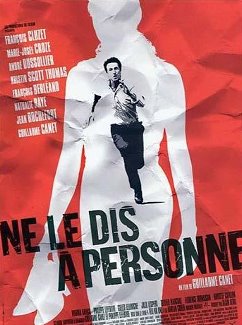
guillame canet's TELL NO ONE (2006) & brad anderson's TRANSSIBERIAN (2008)
 what is it about the French that they've managed to keep the spirit of Alfred Hitchcock alive as Hollywood's efforts at the suspense thriller have forked off into spectacle and twisty mediocrity? their fascination with him dates back to the dawn of his glory years, as the New Wavers worked to boost his critical standing and directors like Claude Chabrol and Henri-Georges Clouzot found themselves indebted to his genius as they thrived as his peers and rivals.
and it continues today, as currently evidenced by Guillaume Canet's sly, gripping Tell No One, produced in 2006 but only now seeing a US release. adapted from the novel by American mystery writer Harlan Coben, the story itself is a tip-off, and almost too self-consciously so: pediatrician Alexandre Beck (François Cluzet), still mourning his murdered wife after eight years, begins receiving mysterious emails on the anniversary of her death, just as a new development reopens the investigation and places him back under suspicion. the ensuing labyrinth of lies and secrets finds Beck chasing a love from beyond the grave (a la Vertigo) as he himself is pursued for a crime he did not commit (a la damn near half of the rest of Hitchcock's movies.)
Tell No One, however, is not merely imitation or even emulation; Canet (a heartthrob actor with only one previous feature under his belt) lays out his mystery with both focused aesthetic economy and a fierce desire to entertain, and it's the intersection of the two that really evoke the Master Of Suspense, from the interrupted quiet of the opening scenes to a heartstopping centerpiece across eight lanes of traffic.
there are elements here and there that break the spell: an ill-considered smattering of English pop music undermines Canet's good taste, and he puts his foot on the brakes a little too early, leaving the Big Reveal and its aftermath a bit flat. but it's said that the only way to write a mystery is to come up with the ending and write backwards, and Tell No One evidences a logical extension of that: though the final knot of formerly loose ends is as satisfying as it should be, the joy here is in the telling, which in its own novelistic way transcends Hitchcock's more arid orchestrations of suspense. what really distinguishes Tell No One from its Hollywood counterparts is that beneath the confident slickness is a dense thriller that takes itself, and the audience, seriously.
 it seems a little unfair, though, to pick on American suspense thrillers just as Brad Anderson's latest effort arrives in Knoxville as well, fundamentally different though it may be from Tell No One's literate riddling. (perhaps the film's complete reliance on European funding excuses it.) the cold, claustrophobic Transsiberian follows American couple Roy and Jessie (Woody Harrelson and Emily Mortimer) as they traverse by rail through the badlands of Russia on the way home from a Chinese mission trip, befriending another young couple and a Russian detective (Ben Kingsley) along the way.
no, the couple are not what they seem. and yes, the detective is one step ahead of everyone else. these are not Transsiberian's surprises. what is surprising is where the story goes with these worn elements, and how it gets there. (besides the train -- itself an old standby, especially if we're still talking about Hitchcock.) Anderson unfolds his story unhurriedly, and depends as much on the audience's expectations as the story itself to provide the unease. we gradually get to know Roy and Jessie, occasionally all the better through contradicted perceptions of them, and we attempt to divine the intentions of their traveling companions.
and then, finally, plans are disrupted, though the film continues its deceptively carefree pacing right up to the inevitable (yet thoroughly unexpected) eruption, after which Transsiberian fulfills its coy promises on substantially altered terms. there is deception and considerable suspense, all enhanced by the backdrop of a train barrelling across the tundra, its passengers cornered in the snow white vastness.
sadly, though, there is also final act that takes our upended expectations and squanders them on noisily strained credulity. the story's slow, careful acceleration demands an eventual release, but Anderson (excepting a spectacularly foiled trip to the dining car) provides it largely through shouting and gunplay, and in doing so steers the film straight back toward, if not directly into, the territories of a more mundane thriller. Transsiberian is a noteworthy effort from a director that continues to impress (The Machinist still haunts), but that makes it all the more disappointing when the train finally loses its steam.
(from the KNOXVILLE VOICE)
woody allen's VICKY CRISTINA BARCELONA (2008)
 there's no disputing (even, sadly, among those little familiar with his actual work) that Woody Allen is an amorous sort of guy. throughout four prolific decades his work has focused largely on the interactions of the human heart, and sexuality has always been a part of that, from the ribaldry of his early comedies to the lustful indiscretions of his heavier dramas.
it's a little strange, then, that he would make thirty-eight feature films before getting around to Vicky Cristina Barcelona, the latest shaky step in his encouraging late-career course correction. the film, sunny and sensuous by design, follows its titular Americans (Rebecca Hall and Scarlett Johansson, respectively) on a Spanish holiday during which a Catalan painter (Javier Bardem) forces them to reevaluate their opposing views on love and romance, particularly when his tempestuous ex-wife (Penelope Cruz) returns to his home and his life.
these loaded ideas (Vicky's monogamous stability vs. Cristina's pursuit of passion) are obviously central to Allen's thought process, but for much of its running time the film glides lightly, if sometimes sloppily, along; whether it's the location, the themes, or both, Vicky Cristina Barcelona exists miles away from the grave melodramas and trifling laff-pits that have lately dominated his output. Spain and its environs (particularly Antoni Gaudi's stunning architecture) are done full justice, and the four leads bring a palpable chemistry to their increasingly delicate situation. (Bardem alone is a veritable swoon-factory, likely to seduce the tablecloth right off the table were two of the screen's great beauties not hanging around.)
but as odd as it may be to fault a 72-year-old man for not making a sexier movie, the shortage of genuine steam is the film's undoing. superficially it's all there, and there are sequences for which that's quite enough, but in the end the tone falls prey to the very dilemma being posesd thematically: love does not exist to be figured out, or overthought. (we know these are the themes because the talky proceedings, including an unwelcome, oddly clinical narration, conspicuously telegraph them throughout.) Vicky Christina Barcelona is a film about the heart and certain points south, so it's a shame Woody so rarely lets us out of his head.
(from the KNOXVILLE VOICE)
Monday, August 18, 2008
jacques tati's TRAFIC (1971)
 French actor and filmmaker Jacques Tati only made a handful of films (most of them starring his bumbling, guileless alter ego Monsieur Hulot) but his inimitable blend of physical humor, quizzical social commentary and visual acuity was sufficiently brilliant to ensure that each remains in high regard despite its flaws. this pertains particularly to 1971's Trafic, the final and slightest of his Hulot quartet, but the film still handily impresses; the most plot-driven (insomuch as you can actually synopsize it) of Hulot's outings, Trafic finds him a car designer tasked with transporting his company's latest prototype to an Amsterdam car show. that Hulot is here enabling unbridled modernity is somewhat of a break for the character, but the attitude remains faithful: Hulot's position and task lay a foundation for Trafic's visual and thematic emphasis on the ubiquitousness of the automobile, which pays off repeatedly even if it doesn't leave as focused an impression as its predecessors. but the main attraction, as with all of Tati’s work, is the singular sort of cartoony comic ballet that overtakes every action and detail; as gifted as Tati is as a physical comedian, his real (and rare) contribution to comedy is his profound exploitation of the medium itself, twisted, bent, and made beautiful by the whims of one of film comedy’s genuine visionaries.
(from the KNOXVILLE VOICE)
alex proyas' DARK CITY: THE DIRECTOR'S CUT (1998)
 in the final couple of years of the twentieth century a heady sort of trend emerged in science fiction film; reacting largely to technology's progressing effect on the human experience, The Matrix and a handful of lesser tagalongs wrapped up notions of reality and experience in a bow of paranoiac sci-fi capering. the easy pinnacle of this mini-genre, though (now that we can all agree on The Matrix as little more than a rad tech demo) is the one that takes its cues from deep fantasy rather than virtual reality: Alex Proyas' 1998 stunner Dark City, which follows an apparently murderous amnesiac (Rufus Sewell) through the streets of its titular metropolis as he investigates his own emerging telekinetic powers as well as a race of pasty "Strangers" who may or may not be bending reality to their own sinister purposes.
silly as its synopsis may sound, Dark City's gorgeous, austere blend of fantastical sci-fi and film noir has gained an enthusiastic following since its initial box office sputter (Roger Ebert champions the film as 1998's single best), and the newly prepared Director's Cut should only improve its standing. most of the changes are minor, even unnoticeable, but it's the big one that makes the difference: gone is the theatrical release's studio-mandated opening narration and montage, which together gave away egregious chunks of information about the nature of the Strangers.
the result is a much more suitably mysterious film, as these antagonists and their visually wondrous methods are afforded the introductions and impact they deserve, reinforcing Proyas' strong vision for what the disc's special features reveal to be a film of great personal importance to him. it's generally true that the "alternate cut" has lately become as much a way to move DVDs as a deference to the filmmaker, but fans of the film (and even moreso those seeing it for the first time) will be glad to know that this one moves an already underrated film squarely into the upper reaches of the sci-fi canon.
(from the KNOXVILLE VOICE)
Thursday, July 10, 2008
alfred hitchcock's VERTIGO (1958)
 the Tennessee Theatre's "Summer Movie Magic" series is once again in full swing, populating our local treasure's silver screen with everything from perennial snoozers (Gone With The Wind) to more adventurous selections (Thunder Road's fiftieth anniversary) and underseen classics (It Happened One Night), and this weekend in particular brings perhaps the most exciting, must-see entry in this year's varied lineup: Alfred Hitchcock's masterpiece-among-masterpieces, Vertigo.
 the story of an acrophobic former detective (Jimmy Stewart) tasked with tailing an associate's mysteriously afflicted wife (Kim Novak), Vertigo met a lukewarm reception upon release in 1958, and in a way it's not hard to see why; Hitch's genteel psychosexual melodrama contrasts rather drastically with the crowd-pleasing potboilers he'd been putting out for more than twenty years at that point, and the film is indeed so introverted that it hands out the solution to the central mystery well before it needs to simply because it serves the psychology.
this is not to suggest that Hitchcock sets aside his Master Of Suspense mantle for a single moment; Vertigo still exudes pure mystery (it was, in fact, recently named the genre's greatest film by the AFI) and beguiles with every twist and turn. the difference, though, is that Hitchcock (with screenwriter Samuel A. Taylor, adapting a French novel allegedly written specifically for Hitchcock) here narrows his focus to the mind -- Stewart's darkening obsession, Novak's fractured identity -- and emerges with a more profound mysteriousness than exists elsewhere in his storied body of work.
what may be the key to Vertigo's ever-expanding reputation, though, is that such internalized intrigue leaves Hitchcock free to dabble carefully with the look and feel of the film, and the result is quite simply perfection. Stewart, composer Bernard Hermann and cinematographer Robert Burks all collaborated fruitfully with Hitchcock throughout their careers, but Vertigo remains the deepest, most challenging work any of the four men ever produced. If North By Northwest is Alfred Hitchcock's gift to the audience, and Psycho his gift to the cinema, then Vertigo is nothing less than his gift to art at large, and the opportunity to see it on the big screen should not be passed up.
(from the KNOXVILLE VOICE)
jody hill's THE FOOT FIST WAY and steve conrad's THE PROMOTION (2008)
there's an important bit of screenwriting wisdom stressing the odd but undeniable truth that comedy is a much harder thing to write than drama. where dramatic pieces only necessarily require the tangible minimums of storytelling (scenario, character, conflict) and leave everything else wide open, even the stupidest of comedy scripts ideally involves painstaking attention not only to what is or is not funny but also how to package it; after all, miscalculations in tone, pacing, or performance can conceivably mean the difference between belly laughs and bad times. (see: The Love Guru.)
(just kidding, please don't see The Love Guru.)
even harder is consideration of the comic character, which folds its requirements back into the more complicated realms of drama. it's not quite important that we believe the characters could exist (it's sufficient to understand how they might), but constructing a story around them requires something more: an emotional connection, however slight, is what keeps audiences in the seats even when the jokes start to spoil.
 it's a credit to Jody Hill, then, that his The Foot Fist Way almost manages to succeed as a comedy despite careless disregard for any and all of these guidelines. here is a microbudgeted film (shot in Concord, NC) that remains microbudgeted in spirit, from the indifferent staging and inert pace to the woefully modest scope of its story, and for the most part lacks the sort of inspiration that typically leads a group of friends to make a feature film. throughout the running time there is vulgarity, misanthropy, awkwardness, and even misogyny.
ah, but there is also Danny McBride. perhaps recognizable to some from stolen scenes in David Gordon Green's underappreciated romance All The Real Girls or the probably-suitably-appreciated Hot Rod, the pudgy, mustachioed McBride plays Fred "King Of The Demo" Simmons, a small-town Tae Kwon Do instructor with an unfaithful wife, somewhat dubious credentials, and few friends beyond the children and smattering of adults that faithfully attend his dojo. there is a bit (only a bit) more to the story, but it's fair to say that the focus is much more on McBride than anything to do with the plot, as he gifts the almost forgettable film with a towering, ferociously deadpan comedic performance that has already facilitated his clean jump into mainstream comedy. (next up: a supporting role in Green's Apatow-produced stoner thriller Pineapple Express.) from getting riled up about 2-for-1 crab legs to cornering a pretty student with thickheaded advances, Fred Simmons is a living, breathing (and unmistakably Southern) dumbass, and McBride gives the comedic turn of the year so far.
until, that is, the film finally collapses under his weight. the amateur cast makes The Foot Fist Way's sloppy chug that much slower, and in the end the whole thing is done in by its limitations. though Fred Simmons is an undeniably funny character, neither the filmmakers nor the audience manage anything approaching real empathy on his behalf, and being put-upon and cheated on don't carry that much weight when we're indifferent to their victim's plight. The Foot Fist Way will doubtlessly achieve cult longevity (it was distributed by Will Ferrell, who would likely chair the film's fan club) but it's much more of a raw showcase than a comedic film.
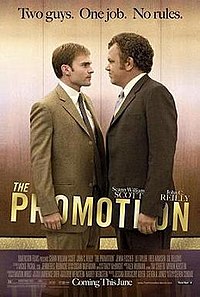 Steve Conrad's The Promotion, on the other hand, has an embarrassment of riches where emotional identification is concerned. the story of two Chicago men (Seann William Scott and John C. Reilly) competing for the managership of their grocery chain's nearest location is ripe enough material for a light dramatic comedy by itself, but Conrard shakes things up by approaching the rivals with equal sympathy and intelligence, ensuring in the process that each member of the audience's moment-to-moment alliances will not only shift but do so independently of everyone else's.
the film is presented primarily from Scott's perspective (the narration is among the tonal debts to Alexander Payne's kindred Election) but we grow increasingly weary of his white lies and poor impulse control; Reilly, on the other hand, emerges as a shady, Canadian usurper to Scott's grocer throne but ends up charming with his innocence. over the course of the movie each man makes decisions and acts in ways that speak alternately well and ill of his character, and we are asked to determine for ourselves the worthiness of each choice.
The Promotion is nuanced, emotionally intelligent, and above all humanistic in a way few films are. Conrard (making his debut behind the camera after writing The Weather Man and The Pursuit Of Happyness) continues to explore the way people define themselves by the work they do, for better or worse, and when the dust settles on the titular promotion it's hard not to feel simultaneously glad and disappointed in the outcome. there are more hard laughs to be found in Foot Fist Way, but why bother with a caricature when the real thing is so much more satisfying?
(from the KNOXVILLE VOICE)
(just kidding, please don't see The Love Guru.)
even harder is consideration of the comic character, which folds its requirements back into the more complicated realms of drama. it's not quite important that we believe the characters could exist (it's sufficient to understand how they might), but constructing a story around them requires something more: an emotional connection, however slight, is what keeps audiences in the seats even when the jokes start to spoil.
it's a credit to Jody Hill, then, that his The Foot Fist Way almost manages to succeed as a comedy despite careless disregard for any and all of these guidelines. here is a microbudgeted film (shot in Concord, NC) that remains microbudgeted in spirit, from the indifferent staging and inert pace to the woefully modest scope of its story, and for the most part lacks the sort of inspiration that typically leads a group of friends to make a feature film. throughout the running time there is vulgarity, misanthropy, awkwardness, and even misogyny. ah, but there is also Danny McBride. perhaps recognizable to some from stolen scenes in David Gordon Green's underappreciated romance All The Real Girls or the probably-suitably-appreciated Hot Rod, the pudgy, mustachioed McBride plays Fred "King Of The Demo" Simmons, a small-town Tae Kwon Do instructor with an unfaithful wife, somewhat dubious credentials, and few friends beyond the children and smattering of adults that faithfully attend his dojo. there is a bit (only a bit) more to the story, but it's fair to say that the focus is much more on McBride than anything to do with the plot, as he gifts the almost forgettable film with a towering, ferociously deadpan comedic performance that has already facilitated his clean jump into mainstream comedy. (next up: a supporting role in Green's Apatow-produced stoner thriller Pineapple Express.) from getting riled up about 2-for-1 crab legs to cornering a pretty student with thickheaded advances, Fred Simmons is a living, breathing (and unmistakably Southern) dumbass, and McBride gives the comedic turn of the year so far.
until, that is, the film finally collapses under his weight. the amateur cast makes The Foot Fist Way's sloppy chug that much slower, and in the end the whole thing is done in by its limitations. though Fred Simmons is an undeniably funny character, neither the filmmakers nor the audience manage anything approaching real empathy on his behalf, and being put-upon and cheated on don't carry that much weight when we're indifferent to their victim's plight. The Foot Fist Way will doubtlessly achieve cult longevity (it was distributed by Will Ferrell, who would likely chair the film's fan club) but it's much more of a raw showcase than a comedic film.
Steve Conrad's The Promotion, on the other hand, has an embarrassment of riches where emotional identification is concerned. the story of two Chicago men (Seann William Scott and John C. Reilly) competing for the managership of their grocery chain's nearest location is ripe enough material for a light dramatic comedy by itself, but Conrard shakes things up by approaching the rivals with equal sympathy and intelligence, ensuring in the process that each member of the audience's moment-to-moment alliances will not only shift but do so independently of everyone else's. the film is presented primarily from Scott's perspective (the narration is among the tonal debts to Alexander Payne's kindred Election) but we grow increasingly weary of his white lies and poor impulse control; Reilly, on the other hand, emerges as a shady, Canadian usurper to Scott's grocer throne but ends up charming with his innocence. over the course of the movie each man makes decisions and acts in ways that speak alternately well and ill of his character, and we are asked to determine for ourselves the worthiness of each choice.
The Promotion is nuanced, emotionally intelligent, and above all humanistic in a way few films are. Conrard (making his debut behind the camera after writing The Weather Man and The Pursuit Of Happyness) continues to explore the way people define themselves by the work they do, for better or worse, and when the dust settles on the titular promotion it's hard not to feel simultaneously glad and disappointed in the outcome. there are more hard laughs to be found in Foot Fist Way, but why bother with a caricature when the real thing is so much more satisfying?
(from the KNOXVILLE VOICE)
Wednesday, July 02, 2008
errol morris' STANDARD OPERATING PROCEDURE (2008)
 "When you're in war, things change."
- Spc. Jeremy Sivitz
amid the unending controversy and contentiousness surrounding the United States' military occupation of Iraq, the revelations in early 2004 of prisoner abuse at Abu Ghraib prison remain the longest, darkest shadow over our continuing presence in the Middle East. while opinions about the war and its prosecution vary from person to person all over the world, the reaction to the Abu Ghraib photographs was unified: in the humiliation of these men, whatever their crimes, was the humiliation of an entire nation already struggling (and struggling to this day) to convince itself and others of the righteousness of its task.
perhaps as tragic, though, was the whimper with which American society eventually edged Abu Ghraib out of its consciousness. after months of soul searching and hand-wringing on the public's part (and no small amount of posturing from every corner of the political sphere) the Bush administration won the day by doling out prison stints and dishonorable discharges to the low-ranking soldiers involved, and brushing off any notion of any further culpability. simply a matter, we were told, of the proverbial bad apples.
such an blithe dodge to such a monumental issue is, of course, fertile ground for the sort of fluffy, finger-pointing activist documentaries Bush has so generously inspired these past eight years, which makes Errol Morris' Standard Operating Procedure that much more important: America's most distinguished, inspired nonfiction filmmaker, Morris here engages on a moral and intellectual level rather than a political one, and remains steadfastly inquisitive in the face of an inconceivably bleak subject. he is fascinated by the reality that Lynndie England and her compatriots are both victim and perpetrator, and cognizant that the circumstances of their monstrousness have deep roots and broad implications; while the endgame of scapegoating and political maneuvering are certainly worthy of scrutiny, Standard Operating Procedure is far more interested in the grander narrative of war and humanity.
not unusually for Morris, the film hinges around a series of interviews. we hear from former Brigadier General Janis Karpinski, insistent that everpresent U.S. intelligence operatives set the tone for the treatment of prisoners; from Tim Dugan, a non-military interrogator working at the prison and attesting to lack of useful intelligence emerging from its chambers; from Brent Pack, a special investigator tasked with interpreting the photographic evidence and, in one of the film's most chilling sequences, delineating the thin legal distinctions between "criminal acts" and "standard operating procedure."
most illuminating, though, are Morris' sit-downs with the offending soldiers, who speak candidly despite an almost visible weight of regret and even confusion. Spc. Sabrina Harman explains of a big smile and thumbs-up in frame with a dead interrogatee as a reflexive snapshot pose. Spc. Jeremy Sivitz speaks of his family's good military name dragged through the mud because he was unwilling to voice his objections to the superior officers involved, while Sgt. Javal Davis describes spending his days guarding Iraqi detainees while the fruits of their countrymen's labor sent US soldiers home in boxes draped with flags, and how that anger and confusion manifests itself when military intelligence officers start encouraging the guards to "soften up" the detainees.
we even hear from Lynndie England herself (looking now somewhat less like a stoned teenage boy) as she discusses spending the early hours of her twenty-first birthday in the throes of an Abu Ghraib all-nighter, and speaks distantly of a love (for abuse ringleader Cpl. Charles Graner) that blinded her to the ramifications of her actions, which included posing for or taking many a famous photograph.
if there is more than the suggestion of apology or rationalization in these soldiers' words, it has been left on the cutting room floor. instead, the film's participants seek only to clarify -- to take this opportunity to speak their piece. it is devastating, but we see in the end that they are ordinary people put in extraordinarily horrible circumstances for which there is little context. we do not forgive, but we inch toward understanding.
there is all of this and much more in Morris' savagely lucid film, which is every bit as hypnotic as 2003's Fog Of War or indeed any of his other work. his sense for structure remains impeccable, and he even ups the visual ante with striking graphics work and evocative, bleached-out "reenactment" footage that makes an impression without upending the film's harsh reality.
in the end, though, it's not his considerable gifts as a stylist or technician that make Erroll Morris such a force in nonfiction film -- it's his knack for extracting the truth, whether from images, words, or even faces. and while Standard Operating Procedure may be necessarily short on objective answers about the horrors of Abu Ghraib, it remains encouraging for us all that there is that much more light cast on a dark hour.
(from the KNOXVILLE VOICE)
Tuesday, June 10, 2008
bryan bertino's THE STRANGERS (2008)
 what are the terms of the contract between a work of horror and its audience? it’s an interesting question with regard to any and all of the genre’s forms, from oral tradition to Stephen King, but it’s most pressing where the horror film is concerned: we’re asked, there in the dark, to place our trust in a variety of terror that will engage us on its own visceral terms rather than those tethered to our imaginations, and what we generally ask in return is to find entertainment in the provocation of our fears. horror fans come in many forms, of course, from the desensitized gorehound to the teenage girl two rows in front of you that collapses in laughter after each shriek without pausing to breathe; so, too, do the movies themselves run an astonishing gamut of styles and sensibilities, each wholly inappropriate for the wrong sort of audience. but the contract remains, and no matter how perverse the escapism is, it's still perfectly reasonable to expect that escape.
in many ways The Strangers is an exemplary American horror thriller, and a confident, undeniably auspicious debut for writer/director Bryan Bertino. the story is minimal, sure, and not entirely unfamiliar: two young lovers (Scott Speedman and Liv Tyler) find themselves alone in a remote summer home as a trio of masked interlopers, motive-free save for bloodlust, attack them unremittingly through the night.
it's a premise that demands quite a lot from its execution, and Bertino is up to the challenge. this is the rare horror film in which aspiring survivors do not simply run amok, lapsing in judgment at the plot's cruel whims; they are instead drawn as finely as the brisk running time will allow, and act with logic and dignity throughout. we are scared with them because we are ushered comfortably into their heads, and we root for them because we are unable to remove ourselves from the overwhelming doom. the film is intimate, even claustrophobic, and once the terrorizing begins it is never unclear that two against three are vastly unfavorable odds.
aesthetically, too, the film is accomplished. though Bertino cribs his creeps and crawls from elsewhere (particularly recent European horror) it all marries together handsomely, from the slow, sure burn of the first act to the nail-biting melee of the third. the antagonists' simple, striking masks (one little more than a small burlap sack) carry the innuendo of inhumanity as their figures initially fade into and pop out of the careful frames, and later suffocate any hope of mercy, or even the barest explanation. there is creepiness to spare in every empty room, creak or sudden twist of the head, until the film tires of being creepy and throws the curtain aside on a symphony of loud, unforgiving malevolence. there is relatively little by way of the graphic violence, but graphic violence would be beside the point -- the violence has long since crept from the screen and into our own helpless engagement.
more important than its craft, however, and more important than its power, is this: The Strangers is first and foremost a work of irredeemable garbage.
there are, of course, those who would say the same thing about any given horror film, with varying degrees of validity. and there's damn sure little to defend the spate of witless, sadistic Xeroxes currently masquerading as mainstream American horror. but what makes The Strangers so egregious, so thoroughly immoral, is that it's very tangibly a worthy genre entry; its artifice and effectiveness preclude the sort of dismissal we might reserve for, say, One Missed Call or whichever numeral they're remaking Saw under this year. it demands and even deserves to be taken seriously, to the degree that when the lights come up and we realize we've just seen a glorified snuff film while Kung Fu Panda played next door, there's little to do but take the entire genre to task, and ourselves as its accomplice.
but that's a trap. The Strangers' real crime, the one that so readily outshines what might otherwise be called virtues, is that behind its polish there is nothing intended to provoke thought or entertainment; it's a glib construction existing only to manipulate your fears and sour your stomach about the depths of human nature. (worst of all the film plays out under the auspices that it was "inspired by true events", a transparent stab at legitimizing its bleak, abhorrent ending.) more than anything else The Strangers seems a tailor-made validation of Michael Haneke's wry, inscrutable Funny Games, which actively chides and goads its audience for daring to eke entertainment from a murderous home invasion sure to end badly for any innocent with the misfortune to be involved. here, in The Strangers, is the same film lobotomized, substituting slick, sick panache for an inkling of thought or conscience.
this is not what horror film is about. the best of them parade wit, joy, ingenuity, and subtext, while even the worst can rely on intrigue and formula to satisfy, even delight, while they scare. and while it's to be acknowledged that there always have been and always will be works akin to The Strangers, on both its own terms and those of its vexing, meritless cynicism, those films don't typically come in third place at the box office; as little we can ask and expect of mainstream horror, it's always been encouraging that films taking us to the edge are typically willing to give us a lift back.
(from the KNOXVILLE VOICE)
Saturday, May 24, 2008
steven spielberg's INDIANA JONES AND THE KINGDOM OF THE CRYSTAL SKULL (2008)
 what is it that we expect from another Indiana Jones film, 27 years after the first one and nearly 20 since the last? what is it that we want? an effortless bridge between Old and New Hollywood, Raiders of the Lost Ark is without question one of the cinema’s grandest adventures, and the very nature of Messrs. Spielberg and Lucas’ stubbornly iconic character is one of wondrous, nonstop exploits that have spread from the big screen to books, video games and a television series, so it’s only natural that the thought of a fourth film would make our collective mouths water with the lingering taste of uncompromised escapism.
 deep down, though, could anyone conscious of Hollywood's current culture of branding-obsessed shamelessness have possibly expected Indiana Jones and the Kingdom of the Crystal Skull to live up to the legacy? (depending on whom you ask, not even Temple of Doom and Last Crusade manage such a feat.) more pointedly, how confident were we that it wouldn’t be kind of an embarrassment? judging from the reviews, the answer is “not particularly”: both audiences and critics alike seem to be appraising the film kindly based as much on lowered expectations as its own merit.
this is a fitting reception for the film, which is indeed perfectly alright: Spielberg throws us plenty of inspired, well-constructed action setpieces to ooh and aah at, and the series gets a welcome infusion of distinctly American mythology from plot elements involving Area 51 and the Cold War. but the notion of lowered expectations persists, as an excess of focus on the filmmakers' part to give the people exactly what they want ends up depriving Crystal Skull of the subtle magic that makes the other three films so special. Spielberg has built a storied career on the line between art and pure entertainment, but here he errs on the side of caution, and ends up appeasing rather than pleasing. the most important question: is that his fault, or ours?
Friday, May 23, 2008
garth jennings' SON OF RAMBOW (2008)
 what is it about a child's mind that turns the countryside into a rolling symphony of righteous, invisible explosions when viewed through the window of a moving car? that turns a scarecrow at midday into a conniving foe, or a red necktie into a triumphant, bloody sweatband? Son Of Rambow is the rare sort of film about children that manages to mine these details convincingly, and put them to consistent use. because its protagonists lives are at times uncomfortably real, imagination isn't anything so simple as a momentary escape; it colors their behavior, and emboldens them.
soon after we first meet Will Proudfoot (Bill Milner), his teacher dismisses him from class as they prepare to watch a documentary film. a member of the culture-resistant Christian Brethren sect, he is forbidden from watching television, and instead sits in the hall filling a notebook with colorful sketches until a well-thrown tennis ball introduces him to the school's resident ne'er-do-well Lee Carter (Will Poulter). the two tenuously hit it off -- Will enticed by the novelties of secular childhood, Lee fumbling with the prospect of much-needed friendship. later that afternoon, a bootleg of Sylvester Stallone's First Blood becomes Will's first and only taste of popular culture.
the bootleg is Lee's own work (on behalf of his brother/erstwhile guardian), shot with a spanking, bulky new VHS camcorder. (among other things Rambow is, from its music and fashions to its style and sensibility, a graceful re-creation of mid-80s Britain.) but the camera serves another purpose in Lee's life, as he occupies his free time aspiring to a BBC contest for young filmmakers, and soon forces Will to be his star. (such is the dynamic of their friendship, even as it evolves; Will himself is heartbreakingly eager to forsake his upbringing, but Lee's Nelson Muntz complex keeps their relationship straddling a line between earnest affection and instinctive bullying.) and thus the fantasy-laden "Son Of Rambow" is born, first on Will's page and then through Lee Carter's lens. then, as one might expect, things begin to get in the way.
high concept aside, Jennings and filmmaking partner Nick Goldsmith don't seek to do too much more than celebrate the dramatic family comedy, and their smart script gets them most of the way there by itself; it's alternately fanciful and melancholy, both dignified and freewheeling, never acknowledging that these qualities too often stand at odds with each other. but it's also fascinating in the ways it chooses to augment and undermine genre conventions: though it's clear, for instance, that the traditionalist Brethren are obstructing Will's happiness, the film deigns to neither contrived malevolence nor apologism. why? because that's character, not plot. the same goes for Lee's nascent kleptomania, and the bad influence it casts on Will. as they leave a store, ill-gotten wares nearly spilling from their coats, we cringe for the impending reprisal, but none comes; why, after all, bend events for the sake of judgment?
the film's style is impressive in the same subdued way. there are scattered sequences animated to complement Will's wandering imagination, and the bulk of the filmmaking scenes are tinged with gloriously cartoony physical humor. but despite their music video background and their cluttered, well-meant debut The Hitchhiker's Guide To The Galaxy, Jennings and Goldsmith (together known as Hammer & Tongs) generally imbue the rest of Son Of Rambow with a handsome, patient tone that persists even through a goofy French exchange student subplot and glorious bits of throwaway wit, turning what could have been merely cutesy and indulgent into something far more accomplished.
as for the boys' movie? it's to Hammer & Tongs' further credit that the novelty of their film-within-a-film settles comfortably into the backseat once the story draws us in, and it's in this sense in particular that Rambow tops fellow MTV escapee Michel Gondry's vexing but similarly conceived Be Kind Rewind. both are about friendship, fictions, collaboration and democratized expression, but Rewind was all concept, blindsiding its audience with a careless, inept frame for VHS shenanigans; with Rambow the delicately gangly British boy playing "Rambow" might put people in the seats, but what'll keep them there is one of most charming, worthy family films in recent memory.
Subscribe to:
Posts (Atom)

 Posts
Posts


